The State Department puts Mexico City at Level 2, "Exercise increased caution", in its Mexico advisory of 29 May 2026. That is the second of four levels, and it sets no travel limits for US government staff in the city. It does ask for more care than at home, mostly at night outside the main tourist areas. We read the advisory on travel.state.gov on 14 October 2026.
What the State Department says about Mexico City
Note: Mexico City, Level 2, "Exercise increased caution" due to terrorism and crime. Both violent and non-violent crimes occur throughout the city. Take extra care, especially at night, outside the popular tourist areas, where police patrol more often. Petty crime is frequent in both tourist and non-tourist areas. "There are no specific restrictions on travel for U.S. government employees in Mexico City" (State Department, Mexico Travel Advisory, issued 29 May 2026, Mexico City section, read 14 Oct 2026)
Note: The country summary names terrorism, crime and kidnapping for Mexico as a whole. It says conditions can vary widely from state to state and even within a state. US citizens should follow the rules for US government staff: no travel between cities after dark, use dispatched cars from regulated taxi stands or app services such as Uber or Cabify, do not wave down taxis on the street, and avoid traveling alone, especially in remote areas (same advisory, read 14 Oct 2026)
The advisory groups Mexico's 31 states and Mexico City by level. Six states are at Level 4, "Do not travel": Colima, Guerrero, Michoacán, Sinaloa, Tamaulipas and Zacatecas. Mexico City and the State of Mexico around it are both at Level 2. Only Campeche and Yucatán are at Level 1.
The advisory also covers road checkpoints. It says to comply, and that fleeing or ignoring instructions can get you hurt or killed. That matters more on a road trip than on a city visit.
On 14 October 2026 the advisory page listed a US Embassy demonstration alert for Mexico City, dated 13 October 2026. Check the embassy's alerts the week you fly.
Taxis, the Metro and money
| Question | What the official pages say | Source |
|---|---|---|
| Street taxis | Do not wave them down. Book through your hotel or an authorized taxi stand (a "sitio"), or use a ride app such as Uber or Cabify. Check the plate and car type before you get in | State Department advisory page, read 14 Oct 2026 |
| Airport taxis | Pay at the booths inside the terminal. Fares are fixed by city zone. Ignore offers in the arrivals hall | Mexico City tourism page, read 12 Oct 2026 |
| Metro | A ride is 5 pesos. Carry a bag in front in crowds, keep phones and wallets out of back pockets, watch your things at transfers | Mexico City tourism site, Metro page, read 12 Oct 2026 |
| Buses | Public buses are generally safe in Mexico City. Theft is common, so guard your things | State Department advisory page, read 14 Oct 2026 |
| After dark between cities | Do not travel between cities after dark | State Department advisory |
| ATMs | Use ATMs in safe, well-lit places, ideally inside a bank. Watch for card skimmers. ATMs may charge high fees | State Department advisory page, read 14 Oct 2026 |
The advisory page also says robberies happen often in Mexican cities, and that criminals force victims to take cash out with their bank cards or pose as taxi drivers. Its advice is to carry little cash in public and to use trusted ride apps or a booked taxi.
The Metro page gives its pickpocket advice in one short line and does not rate any station or line. We did not ride the Metro for this page.
STEP, the Smart Traveler Enrollment Program, is free. The advisory page says it sends you updates and alerts from the US embassy or consulate and helps them reach you in an emergency. A US citizen can sign up at step.state.gov.
Neighborhoods visitors use
Note: The city's tourism site says Roma and Condesa have long been the districts most visited by international guests. Both have galleries, tree-lined streets, restaurants and parks (Mexico City tourism site, Condesa and Roma page, read 12 Oct 2026)
Note: Its hotel page names Polanco and Centro among the areas that web searches usually bring up, and adds Cuauhtémoc, Juárez, Roma, Santa María la Ribera, San Rafael and Tabacalera as good areas too (hotel page, read 12 Oct 2026)
| Area | What visitors use it for | Source for that |
|---|---|---|
| Roma and Condesa | Walking, food, parks, galleries | City tourism site |
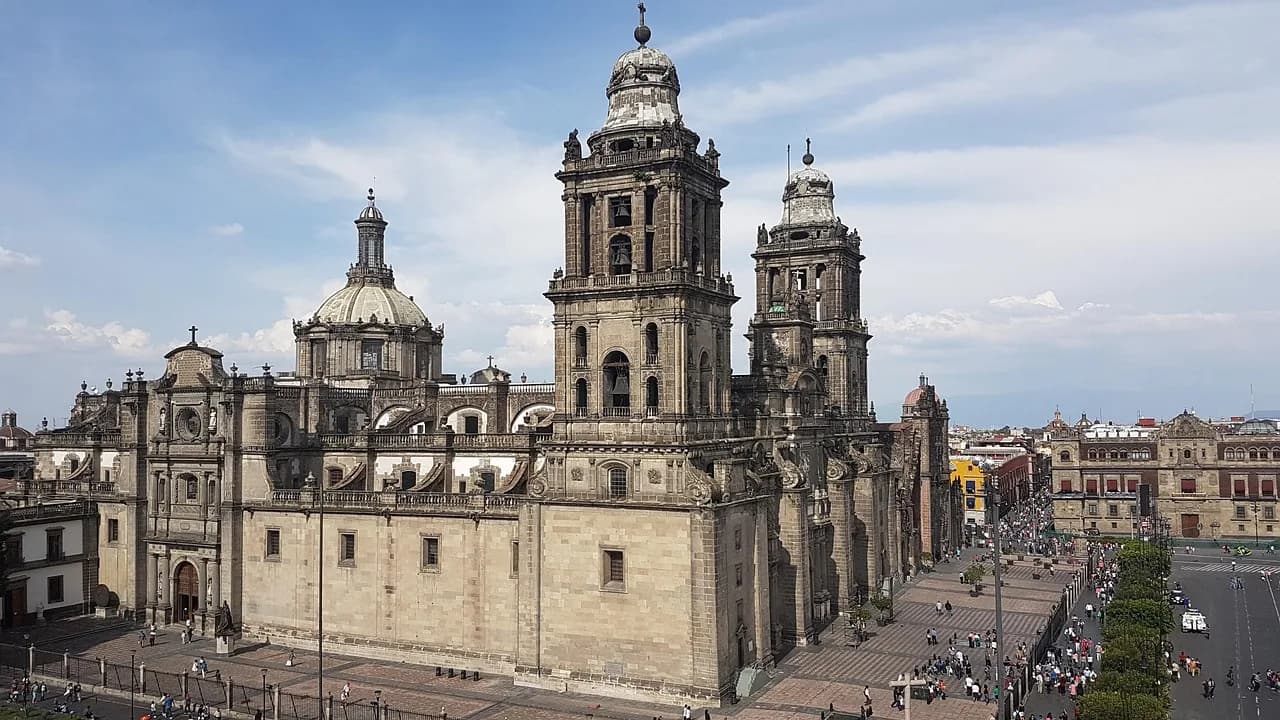
| Centro Histórico | The Zócalo and museums. Metro Line 2 stops at Zócalo and Bellas Artes | City tourism site |
| Polanco | Chapultepec and museums. Metro Line 7 serves Polanco | City tourism site |
| Coyoacán | Community ofrendas at Day of the Dead, says the city's guide | City tourism site, Day of the Dead guide |
We give no crime figures for any of these areas. We found no official crime page by neighborhood, and press reports are not a basis for a ranking. The advisory's Mexico City section does not name neighborhoods. It only says police patrol the popular tourist areas more, and asks for extra care at night outside them. Ask your hotel about the streets near it.
Altitude
Note: "At 2,240 meters, Mexico City is well above the limit" for altitude sickness, which the page says can start above 1,500 m, though many visitors have no symptoms. Common ones: shortness of breath, dizziness, headache, fatigue and loss of appetite. Advice: rest often, drink more water, avoid alcohol and smoking, skip hard exercise, and call LOCATEL, the city's information line (press 6 for English) if you need medical help (Mexico City tourism site, altitude sickness page, undated, read 14 Oct 2026)
The State Department's advisory page also names Mexico City as a high-altitude city and points to the CDC's page on travel to high altitudes. Plan a light first day. If you have a heart or lung condition, ask your own doctor before you go. That last line is our advice, not the city's.
If you live in the US but are not a US citizen
Indian, Filipino and Chinese passport holders need a Mexican visa unless they hold a valid US visa or a valid US green card. INM lists India, the Philippines and China as countries whose nationals need a Mexican visa. Mexico's consulates in the US say a valid US visa or green card replaces it.
| Passport | With a valid US visa | With a valid US green card | With neither |
|---|---|---|---|
| India | Visa-free, if the visa is valid and stamped in the passport | Visa-free, if the card is valid, shown with the passport | Apply for a Mexican visa at a consulate, by appointment |
| Philippines | Same | Same | Same |
| China | Same | Same | Same |
Note: Consulado de México en Washington: holders of a valid, unexpired US visa, or of a valid US resident card, need no Mexican visa for tourism, business or transit. Show it with your passport, and both must stay valid for the whole stay. "All EAD cards, I-797 A Forms, Advance Parole Forms, I-20 OR DS-2019 are not accepted to enter Mexico." If your US visa or card has expired, you must apply for a Mexican visa (consulmex Washington, English visa page, read 14 Oct 2026; the page shows no update date)
Note: INM's list of countries whose nationals need a visa includes China, Filipinas and India. INM dates the page 1 March 2024 (INM, read for our Mexico entry page on 12 Oct 2026, not re-read)
Which US visa types count, and whether the visa must allow multiple entries, is not confirmed. The Washington page does not say. Ask the consulate that serves your state. This is a Mexican rule, so it applies in Mexico City the same as in Cancun.
Coming back to the US is a separate check.
Note: Green card holders: to re-enter after a trip abroad, present a valid, unexpired green card. A short trip usually does not affect permanent resident status (USCIS, "International travel as a permanent resident", last reviewed 12 Sep 2025, read 14 Oct 2026)
Note: Visa holders: if your US visa has expired, a trip of 30 days or less only to Mexico or Canada can still let you re-enter on your valid I-94, under the "automatic revalidation" rule. You need a valid passport and must not have applied for a new US visa while abroad. The rule does not cover nationals of countries the State Department lists as supporting terrorism (22 CFR 41.112(d), eCFR, read 14 Oct 2026)
We did not find a CBP page that walks through automatic revalidation. If your visa has expired or your status is pending, ask your employer's immigration lawyer or your school's international office before you book.
For safety advice, the State Department's Level 2 wording is the same for every nationality. Its advisory is written for US citizens. We found no official safety page written for other passports. For the FMM tourist form and the fee, see our Mexico entry page.
What we checked and what can change
Read on 14 October 2026: the State Department's Mexico Travel Advisory page on travel.state.gov (issued 29 May 2026), including its Mexico City section and its travel guidance on taxis, buses, ATMs and altitude; the department's advisory RSS feed and advisory data feed, which carry only the country summary; the Mexico City tourism site's altitude sickness page; the Washington consulate's English visa page; USCIS's page on travel as a permanent resident; and 22 CFR 41.112 on eCFR. Read on 12 October 2026 for our other Mexico City pages and not re-read: the city's Metro, Condesa and Roma, hotel and airport taxi pages, and INM's visa country list. The Metro's own site did not load for us on 14 October.
Not confirmed: any official crime figures for the city or its neighborhoods, an official safety rating for the Metro, and the text of the US Embassy's 13 October alert, which we saw only as a title. An advisory can change at any time, so read the live one before you fly. We did not travel to Mexico City for this page.