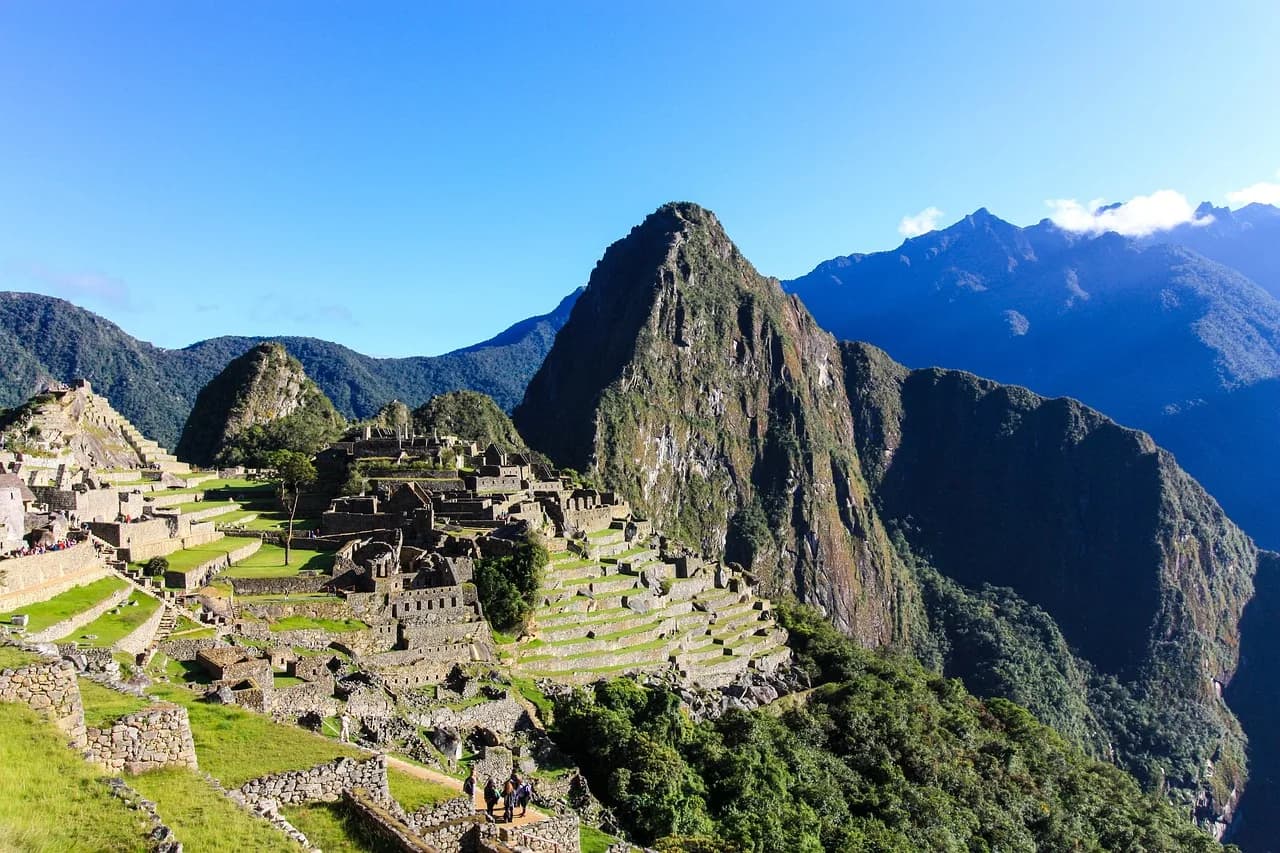
The best time to visit Machu Picchu is April to October, which is the recommended season on Sernanp's page for the sanctuary. Sernanp lists November to March as the rainy season, and the Inca Trail closes every February. We read Sernanp, SENAMHI and the Ministry of Culture on 15 October 2026.
Dry season and rainy season
Note: Sernanp's page for the Historic Sanctuary of Machupicchu: "Recommended season: From April to October." "Rainy season: from November to March." The page also gives the Inca Trail network hours as 05:30 to 14:00 (Sernanp, visitaareasnaturales.sernanp.gob.pe, read 15 Oct 2026). The page gives no update date
Note: SENAMHI, the national weather service, says that in the Urubamba basin the wet period "se inicia en septiembre y termina en abril" and the dry period of light rain runs from May to August. January has the highest rainfall and July the lowest (SENAMHI, climate change scenarios for the Urubamba basin, 2007, rainfall for 1971 to 2000, read 15 Oct 2026)
The two sources do not use the same wet season dates. Sernanp says November to March. SENAMHI's older basin report says September to April for the whole valley. The same report says that below 2,600 m, October to April brings 85% of the year's rain. Both sources agree that May to August is dry. SENAMHI names January as the wettest month. So September, October and April sit in Sernanp's recommended season but at the edge of SENAMHI's wet period. Expect some rain in those months.
| Months | Machu Picchu station (mm) | Cusco station (mm) |
|---|---|---|
| December to February | 870.3 | 385.0 |
| March to May | 557.2 | 158.3 |
| June to August | 166.0 | 18.5 |
| September to November | 416.2 | 145.1 |
| Whole year | 2,009.6 | 707.0 |
Source: SENAMHI, Table 4 of its 2007 report, average rainfall for 1971 to 2000, read 15 Oct 2026. The figures are old and come from a few stations. The same report says in its text that the Machu Picchu area gets about 300 mm a month in the rainy period and about 50 mm a month in the dry one. December to February is about 43 percent of the year's rain at the Machu Picchu station, by our sum.
SENAMHI's spring outlook of 21 September 2026 expects normal to below normal rain in parts of the southeastern highlands, mainly Ayacucho, Apurímac, Cusco and Puno, and nights colder than usual mainly in Apurímac, Cusco and Puno (SENAMHI press note on gob.pe, read 15 Oct 2026). It is a forecast for coming months, not a guarantee for your dates.
Month by month
Note: Daily caps for 2026: 5,600 on 1 Jan, 2 to 5 Apr, 19 Jun to 2 Nov and 30 to 31 Dec, and 4,500 on every other day (Ministry of Culture, Resolution 285-2025-MC annex, as read for our tickets guide on 12 Oct 2026). The Ministry's note of 22 Sep 2026 repeats 5,600 for high season and 4,500 for low season (read 15 Oct 2026)
| Month | Season (Sernanp) | Daily cap in 2026 | What to know |
|---|---|---|---|
| January | Rainy | 4,500 (5,600 on 1 Jan) | Rain peak in SENAMHI's data. Cusco culture office on rain alert in Jan 2026 |
| February | Rainy | 4,500 | Inca Trail network closed all month |
| March | Rainy | 4,500 | Trail reopened 1 March in 2026, but only on 1 April in 2025 |
| April | Recommended season starts | 4,500 (5,600 on 2 to 5 Apr) | SENAMHI still counts April as wet. In 2025 the Inca Trail stayed shut until 1 April |
| May | Recommended | 4,500 | Dry. SENAMHI's dry period of light rain begins |
| June | Recommended | 4,500 until 18 Jun, then 5,600 | Cap rises on 19 June |
| July | Recommended | 5,600 | Lowest rain in SENAMHI's data |
| August | Recommended | 5,600 | Dry, but rain closed the Inca Trail from 19 to 25 Aug 2026 |
| September | Recommended | 5,600 | SENAMHI says the wet period starts this month |
| October | Recommended | 5,600 | Last month of the recommended season |
| November | Rainy | 5,600 on 1 to 2 Nov, then 4,500 | Cap drops on 3 November |
| December | Rainy | 4,500 (5,600 on 30 to 31 Dec) | Wet quarter begins |
The cap is the most people the Ministry allows in. It is not the number who come. We found no official monthly visitor count. Four routes, 1-C, 1-D, 3-C and 3-D, open only in high season, according to the Ministry's circuit page as read for our tickets guide. See that guide for the circuits and prices.
The Inca Trail closes in February
Hours: Sernanp, 26 Jan 2026: during all of February access to the Inca Trail network of the Machupicchu sanctuary is closed. Routes 1, 2, 3, 5 and 6 are unavailable to 28 February. Operations resume "con total normalidad" from 1 March 2026. Sernanp gives the reason as natural recovery of ecosystems, upkeep of visitor infrastructure and biological monitoring (Sernanp press notice, gob.pe, read 15 Oct 2026)
Note: Peru's tourism ministry (Mincetur), 26 Jan 2016: the Inca Trail is closed all of February for conservation, cleaning and drain upkeep. Only the trail entrance and the 18 sites along the trail close, and the main access to the citadel of Machu Picchu stays open. The minister said the closure has been held routinely since 2002 under the site's rules (Mincetur press note, gob.pe, read 15 Oct 2026)
Note: The closure can run long. A joint notice of 29 March 2025 from the Ministry of Culture, Sernanp and the Cusco regional government reopened the Inca Trail network only from 1 April 2025, with detours around landslides (Sernanp notice, gob.pe, read 15 Oct 2026)
The February closure is for the Inca Trail network, not the ruins. The 2027 dates are not confirmed, since Sernanp issued the 2026 notice on 26 January. Plan an Inca Trail trip for another month, and keep March loose in case the reopening slips as it did in 2025. The Inca Trail network is capped at 750 visitors a day, and it is a separate permit (Ministry of Culture note of 22 Sep 2026, read 15 Oct 2026).
Note: Rain can close the trail in the dry season too. Cusco's culture office suspended entry to the Inca Trail network from 19 August 2026 after heavy, unusual rain from the night of 17 August caused landslides and flooded camps. It reopened routes 1, 2 and 3 on 26 August 2026 (Dirección Desconcentrada de Cultura Cusco, notices of 18 and 24 Aug 2026, read 15 Oct 2026)
Rain and closures
Note: Cusco's culture office, 14 Jan 2026: it activated a permanent alert at parks and archaeological sites in the region because of heavy rain, under Supreme Decree 003-2026-PCM, which declared an emergency in districts and provinces of Cusco. Staff were on active watch for the rainy season (Dirección Desconcentrada de Cultura Cusco, read 15 Oct 2026)
The office posted the same kind of rain alert in January 2020, January 2024 and January 2025, so alerts are routine in the rainy season. An alert puts staff on watch. It does not mean Machu Picchu closed, and the notice does not say it did. We did not read a list of past closures, and we cannot say how many days the site was shut in a given year.
Altitude
Machu Picchu is lower than Cusco. Cusco is over 3,399 m (11,150 ft) per PromPerú, and Machu Picchu is 2,430 m on PeruRail's plan page. Our altitude guide gives the CDC and MINSA advice: rest the first day, drink water, and skip alcohol at first. A slow start in the Sacred Valley helps before the ruins. Altitude is the same in every month, so it does not change the best time.
The worst time and why
For most people it is February. The Inca Trail is closed, the Machu Picchu station is in its wettest quarter at 870.3 mm for December to February, and Cusco's culture office put sites on rain alert in January 2026. January sits in the same wet quarter, and SENAMHI counts March in the wet period too. If you want a hike with a view, the dry months from May to August are the ones SENAMHI shows with the least rain. From 19 June the cap also rises to 5,600.
If you live in the US but are not a US citizen
Peru is the country you enter before Machu Picchu, so the visa rule comes first. The source is the foreign ministry's table "Requerimientos y exoneración de visas para ciudadanos extranjeros que cuenten con pasaportes ordinarios", a PDF on the ministry's gob.pe page (page dated 5 March 2026, file name dated 16 July 2026). It is in Spanish.
Note: Philippines: exempt from a tourist visa. The stay is 90 days, extendable once for the same period, within 365 days from first entry (foreign ministry visa table, file dated 16 Jul 2026, read 15 Oct 2026)
Note: India and China: marked "Si/No". A holder of a valid ordinary passport can enter without a tourist visa if they hold a visa "con una vigencia mínima de seis (6) meses" from the United States, Canada, the United Kingdom, Australia or a Schengen state, or hold permanent residence in one of those places. The stay is 180 days and cannot be extended, within 365 days from first entry (same table)
| Passport | Visa-free for tourism? | With a US visa | With a US green card | With neither |
|---|---|---|---|---|
| India | Only with a listed visa or residence | Yes, if the visa has at least 6 months of validity | Yes, as permanent residence in the US | A Peruvian visa is required. How to apply is not confirmed |
| Philippines | Yes, no US document needed | Not needed | Not needed | Not needed. Up to 90 days, extendable once |
| China | Only with a listed visa or residence | Yes, if the visa has at least 6 months of validity | Yes, as permanent residence in the US | A Peruvian visa is required. How to apply is not confirmed |
Not confirmed: whether the US visa must allow multiple entries, which US visa types count, whether a visa that is still valid but nearly expired is enough on the day you land, and how a green card is shown at the border. The table does not say any of these. Peru's immigration agency, Migraciones, says your passport must be valid for at least six months. Your airline may ask for the same proof at check in. Ask a Peruvian consulate before you book. Our Peru entry page has the full text and sources.
What we checked and what can change
Checked on 15 October 2026: Sernanp's page for the Historic Sanctuary of Machupicchu, its notices of 26 January 2026, 28 February 2026 and 29 March 2025, Mincetur's press note of 26 January 2016, SENAMHI's 2007 report on the Urubamba basin (Table 4, rainfall for 1971 to 2000) and its press note of 21 September 2026, the Cusco culture office's notices of 14 January 2026, 18 and 24 August 2026 and its earlier rain alerts, the Ministry of Culture's note of 22 September 2026, and the foreign ministry's visa table. Taken from our other guides, read on 12 October 2026 and not re-read: the dates in the daily cap resolution, the circuits, Migraciones' passport rule, and the altitude figures from PromPerú and PeruRail.
Not confirmed: monthly temperatures, monthly visitor counts, the 2027 Inca Trail closure dates, whether routes 5 and 6 reopened on 26 August 2026, how often rain closes Machu Picchu, hotel and train prices by month, and the visa questions listed above. Sernanp's page gives no update date, and SENAMHI's rainfall is a 1971 to 2000 average from a 2007 report. We did not visit Machu Picchu for this page.
What can change: the Ministry sets caps by resolution, its ticket rules were in a 30 day trial from 22 September 2026, and the weather in any one year can differ from the average.