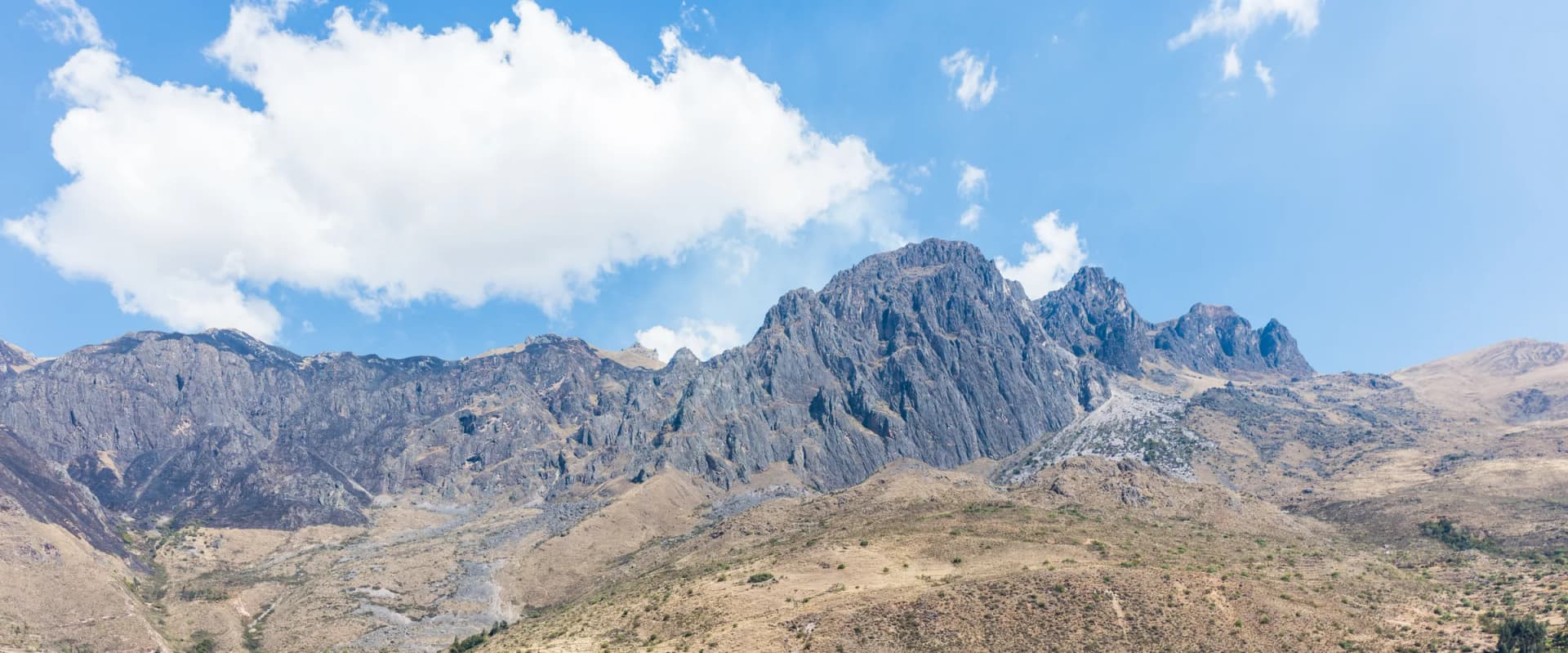
Cusco's altitude is over 3,399 m (11,150 ft), says PromPerú, and Machu Picchu is lower, at 2,430 m. Plan a slow first day, drink water and skip alcohol. If you can, sleep lower in the Sacred Valley first, and put Machu Picchu later in the trip. This page repeats what CDC and Peru's health ministry (MINSA) say. It is not medical advice, and we are not doctors.
How high is it
Note: Cusco: over 3,399 m (11,150 ft) above sea level (PromPerú, Recommendations for altitude sickness in Cusco, read 12 Oct 2026). CDC's Yellow Book lists Cusco at about 3,350 m (11,000 ft) (CDC Yellow Book 2026 chapter on high-altitude travel, read 12 Oct 2026). Machu Picchu: 2,430 m (PeruRail plan page, read 12 Oct 2026)
CDC sorts first-night sleeping heights into groups. Under 2,750 m is low risk, 2,750 to 3,400 m is medium and over 3,400 m is high. Cusco is listed just under the high line, so it falls in the medium group on CDC's numbers. We cannot say which group you are in. Your own history changes it.
The first day
Note: PromPerú: take it easy on the first day, rest, walk slowly, climb stairs without rushing, drink water even if you are not thirsty, eat light meals, avoid alcohol and tobacco for the first days, stay warm and use sun protection. Many hotels and health centres offer extra oxygen (PromPerú, read 12 Oct 2026)
Note: MINSA, Peru's health ministry, 4 Apr 2026: above 2,500 m, rest fully for the first hours, avoid hard effort, drink plenty and eat light meals. Children may show it only as constant crying, so watch them closely. A MINSA lung doctor says reactions are normal for the first two or three days (MINSA press note, read 12 Oct 2026)
Note: CDC: do not drink alcohol or do heavy exercise for at least the first 48 hours above 8,000 ft. The body's early adjustment takes about 3 to 5 days (CDC Travel to High Altitudes page, last reviewed 16 Aug 2022, and the Yellow Book 2026 chapter, read 12 Oct 2026)
Put the Machu Picchu day later in the trip, not on the first day. The site is lower than Cusco, but a train day with a 03:20 start is not a slow first day. Our train and ticket pages are linked at the end.
Sleeping lower first
Note: CDC Yellow Book: do not go from below 1,200 m straight to a sleeping height of 2,750 m in one day. Above 3,000 m, raise your sleeping height by no more than 500 m a day. In places such as Cusco and La Paz, travelers can sleep one or two nights lower than the airport first (CDC Yellow Book 2026 chapter, read 12 Oct 2026)
Note: CDC also says day trips to a higher place followed by sleep at a lower one can help (CDC Travel to High Altitudes page, last reviewed 16 Aug 2022)
For Cusco, the usual lower base is the Sacred Valley. PeruRail's taxi estimates from central Cusco are 1 h 20 to Urubamba and 1 h 30 to Ollantaytambo. The valley route also fits trains that leave from Ollantaytambo.
How much lower you sleep is not confirmed. PromPerú's two valley pages list 3,274 m and 3,335 m without saying which point they measure, and non-official sources put Ollantaytambo near 2,800 m. Either way, the valley towns are lower than Cusco.
When to see a doctor before you go
These are the groups CDC and MINSA name. If one fits, see a doctor who knows high-altitude health before you book.
-
Heart or lung disease, sleep apnea or sickle cell trait. CDC says to see a doctor familiar with high-altitude medicine, even if the condition is well controlled.
-
Pregnancy. CDC says no studies show harm to the baby from brief trips, and that doctors may advise pregnant travelers not to sleep above 3,050 m. Cusco is above that. Ask your doctor.
-
Diabetes. CDC says it may be hard to manage at high elevation.
-
High blood pressure or an irregular heartbeat. MINSA says to carry all your medicine and to have had a recent check.
-
Altitude illness before. CDC puts a past case of the serious forms, HAPE or HACE, in its highest risk group.
-
Children. MINSA says they can get it too, and may only cry. CDC adds that children who cannot talk may just seem fussy.
Medicine
Ask a doctor about medicine before you go. CDC's Yellow Book says acetazolamide helps the body adjust and that doctors weigh it for travelers in its medium and high risk groups. MINSA says not to take acetazolamide without a doctor's prescription. We give no dose, since it is a doctor's choice. MINSA says common pain relievers can be used for a mild headache.
When to go down
Note: CDC: symptoms of acute mountain sickness are headache, tiredness, loss of appetite and nausea. If they get worse while you rest, go to a lower elevation. Confusion, loss of coordination and drowsiness, or shortness of breath, weakness and cough, can be life-threatening and need a move down at once. People with symptoms should not go higher (CDC Travel to High Altitudes page, last reviewed 16 Aug 2022, and the Yellow Book 2026 chapter, read 12 Oct 2026)
Note: MINSA: if nausea, a strong headache or breathlessness do not pass after rest and pain relief, go to the nearest health centre. For severe symptoms that rest does not fix, the most effective step is to go down (MINSA, 4 Apr 2026)
PromPerú says coca tea is a common drink and that its sweets can ease discomfort. We found no official health page that says it prevents illness.
| Detail | One source says | Another says | What we use |
|---|---|---|---|
| Cusco height | PromPerú: over 3,399 m | CDC: about 3,350 m | About 3,400 m |
| Where "high" starts | MINSA: care above 2,500 m | CDC: high-risk first night above 3,400 m | Both. They measure different things |
| Pregnancy | CDC: no studies show harm from brief trips | CDC: a doctor may advise not sleeping above 3,050 m | Ask a doctor |
| Acetazolamide | CDC: a doctor weighs it for medium and high risk groups | MINSA: not without a prescription | Ask a doctor |
| Coca tea | PromPerú: a common drink that eases discomfort | No health page says it prevents illness | Not shown to prevent it |
What is checked here and what is not
Checked on 12 October 2026: PromPerú's Cusco and Sacred Valley pages, PeruRail's plan page and Cusco page, CDC's "Travel to High Altitudes" page (last reviewed 16 August 2022), the CDC Yellow Book 2026 chapter on high-altitude travel, and MINSA's press note of 4 April 2026. The CDC figures here (heights, risk groups, timings) were checked against the chapter's own wording. The text is ours, not a quote.
Not confirmed: the real height of each Sacred Valley town, and which hotels have oxygen. We give no doses. We did not go to Cusco for this page. This is not medical advice. See a doctor before you go if any group above fits you.