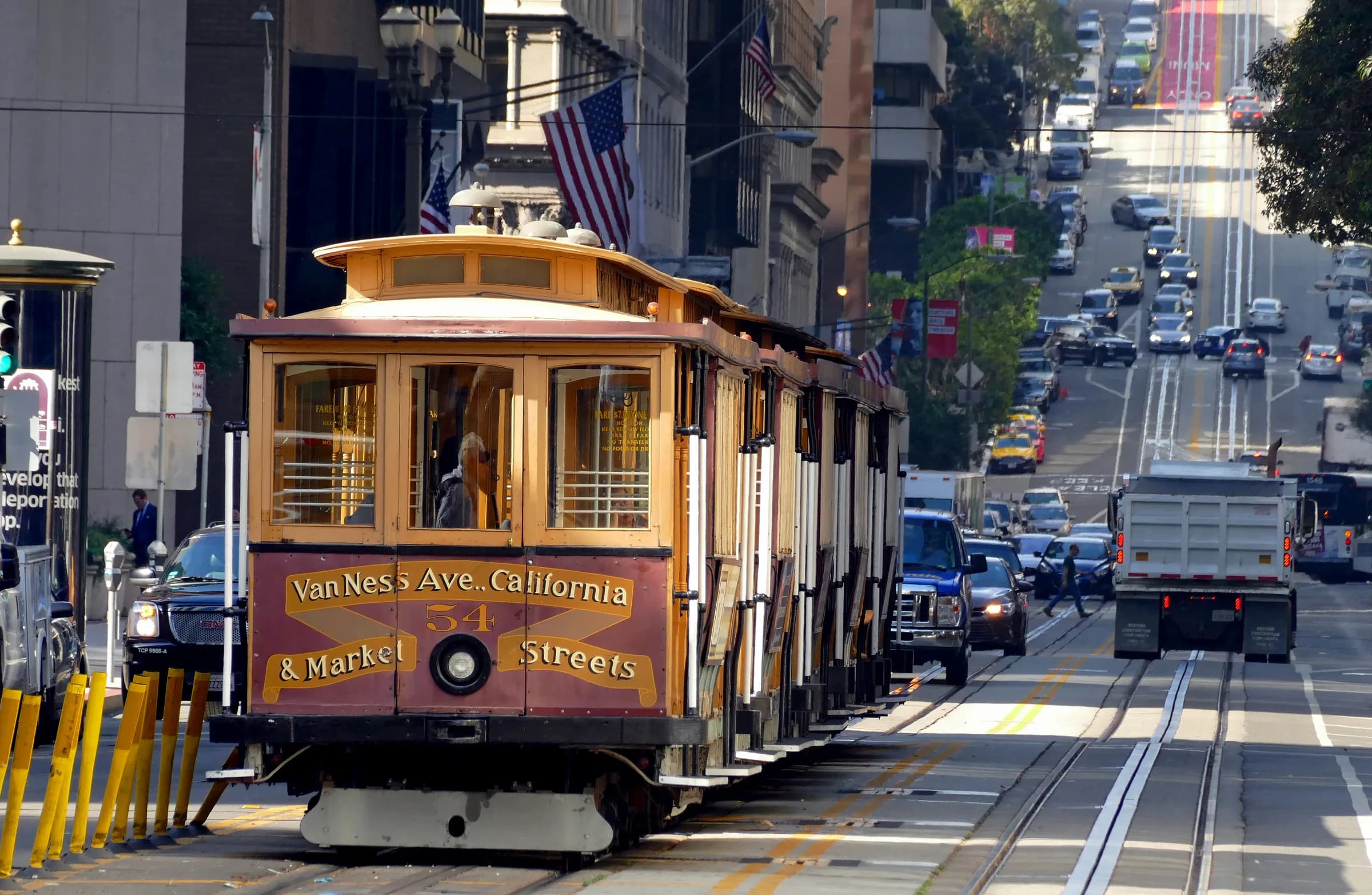
San Francisco is seven miles square, steep in every direction, and the one West Coast city that genuinely punishes a car. The transit map does the rest: Muni for the neighbourhoods, BART for the airport and the Bay, cable cars for the hills, ferries for the water. The decisions are the base and the cable-car timing, and this page makes them.
Where to stay: by what you want outside the door
| Area | Transit | Best for | Watch out for |
|---|---|---|---|
| Union Square | Powell St — BART, Muni Metro, cable cars | First visits, the hub of everything | The blocks west toward the Tenderloin at night |
| Embarcadero / Financial District | Embarcadero, Montgomery — BART, Muni, F Line | Ferries, the waterfront, calmer evenings | Quiet weekends |
| Fisherman's Wharf | F Line, Powell-Hyde cable car | Families, the pier, Alcatraz departures | The city's most touristy mile |
| Nob Hill | Cable cars, the 1 California bus | Views, grand hotels, the cable cars at the door | Steep every direction |
| Hayes Valley / the Mission | Muni Metro, BART 16th/24th | Second visits, the eating and drinking | Further from the icons |
Subway: Powell Street is the city's transit hinge — BART from the airport, the Muni Metro under Market Street, and two cable-car lines starting at the turnaround
Price: $200–400 around Union Square and the Embarcadero, $180–350 at the Wharf and Nob Hill, less in the Mission (our band)
For a first visit, Union Square or the Embarcadero: one puts every system under the hotel, the other puts the water and the Ferry Building outside it. Pick the hotel's block carefully around Union Square — a few streets west the mood changes after dark.
Muni, BART and the Clipper card
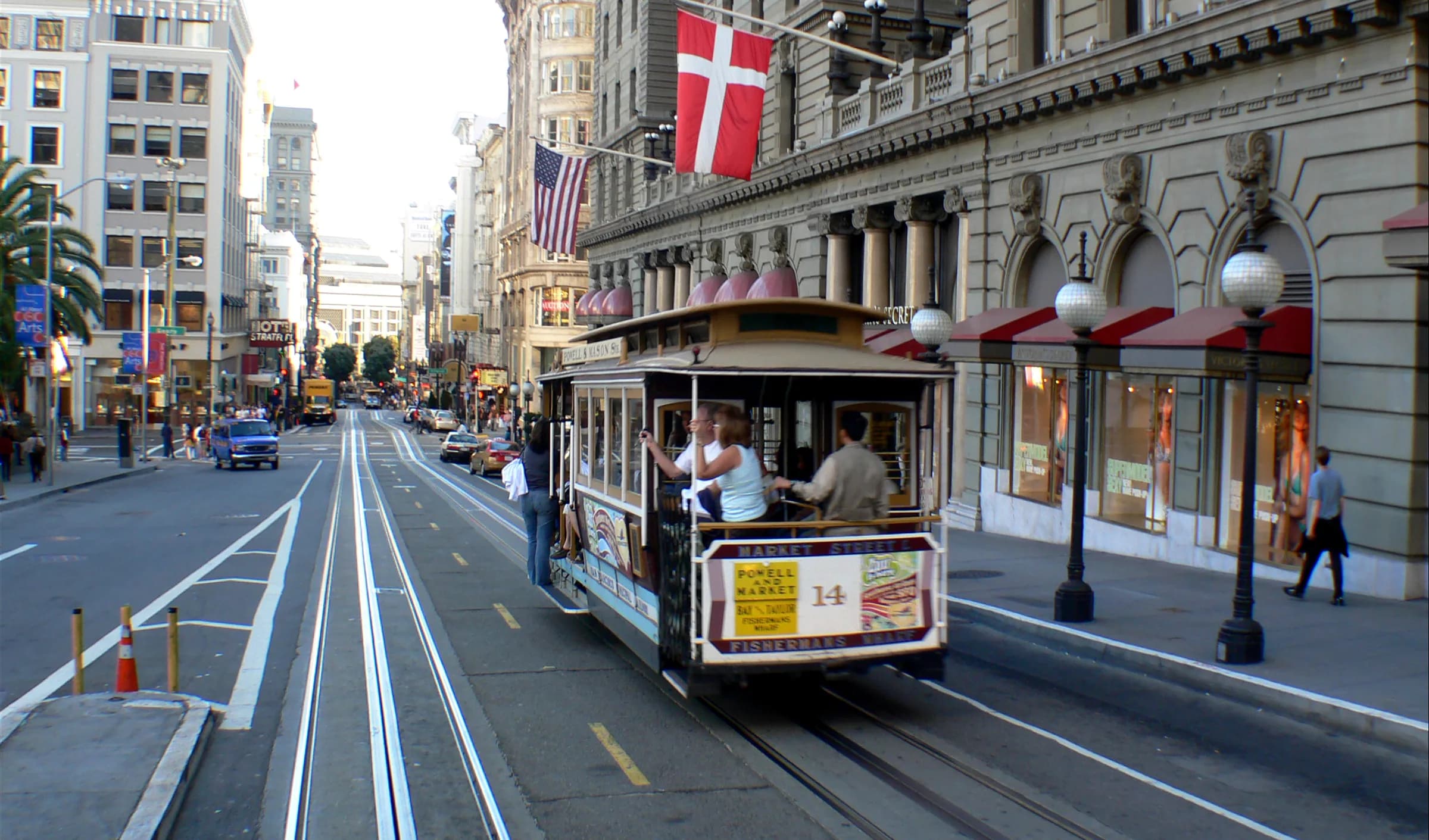
Price: Clipper card or phone wallet — one balance for Muni, BART, cable cars and ferries. Muni is a flat fare with a two-hour transfer; cable cars are a separate, higher per-ride fare; the Muni visitor passport covers everything Muni for one, three or seven days (our estimate)
Hours: Muni about 5am to 1am with an overnight Owl network; BART about 5am to midnight
Note: BART does not travel between city neighbourhoods — that is Muni's job. The F Line's historic streetcars run Castro–Market Street–Embarcadero–Wharf and are the prettiest route in the system
SFO to the city
Getting there: BART from the International Terminal station, about 30 minutes to Powell Street; the AirTrain links the other terminals to it
Price: A little over ten dollars by BART; $45–55 by taxi to Union Square, rideshares somewhat less (our estimate)
Oakland's airport connects by its own people-mover to BART and reaches the city in about 45 minutes — a legitimate alternative when the fare is better.
The cable-car trick
Note: Board the California Street line at the Embarcadero end, or walk three or four stops up Powell and flag the car mid-route before 10am. The Powell–Market turnaround queue is the thing every first-timer regrets
The hills
The map lies: six blocks can mean 200 feet of climb. Route uphill by cable car or bus and downhill on foot — Nob Hill to the Wharf, Twin Peaks to the Castro — and the city becomes a walking city again.
The day outside
Getting there: Muir Woods: ferry to Sausalito, then the seasonal Muir Woods shuttle — both reserved ahead. Fallback: Lands End inside the city, by the 38 bus
What first-timers get wrong
-
Renting a car for the city. Reserve it for the day you leave for Napa or the coast, and pick it up at the edge.
-
Queueing at Powell and Market. The California line and the mid-route stops exist.
-
Walking the Golden Gate Bridge in July clothes. The fog is cold; bring the layer.
-
Confusing BART with Muni. One gets you to the city, the other around it.
Beyond San Francisco without a car
The Coast Starlight runs south to Los Angeles in a scenic twelve hours; the flight takes one.
What is checked here and what is not
Lines, stations and airport links are stable and checked on the date shown; fares and hotel rates are our estimate of the current range.