Korean customs is easy to pass and specific about what it minds. The allowances are generous enough that most travellers clear the green channel with nothing to sign — and the things it does mind, it minds with fines that turn a packet of beef jerky into the most expensive snack of the trip.
The allowances at a glance
| Category | Allowance | Notes |
|---|---|---|
| General goods | US$800 | Combined value of everything bought abroad |
| Alcohol | 2 bottles · ≤2L · ≤US$400 | Age 19+; both caps apply together |
| Cigarettes | 200 (one carton) | Or equivalent in other tobacco |
| Perfume | 100ml | Raised from the old 60ml limit |
| Currency | Declare at US$10,000+ | Cash and cheques combined, in or out |
Every line above re-explained below, with the places people actually trip.
The $800 goods limit
Price: US$800 per traveller, duty owed on the excess — with a voluntary-declaration discount on the duty
This covers what you bought abroad and are bringing in — gifts included. Go over and declare it yourself and the duty comes with a 30% reduction; get picked out of the green channel with an undeclared excess and it comes with a surcharge instead. The arithmetic always favours declaring.
Alcohol: two bottles, two caps
Note: Both limits bind at once — two litres AND US$400. Two ₩300,000 whiskies fit the bottle count and still owe duty
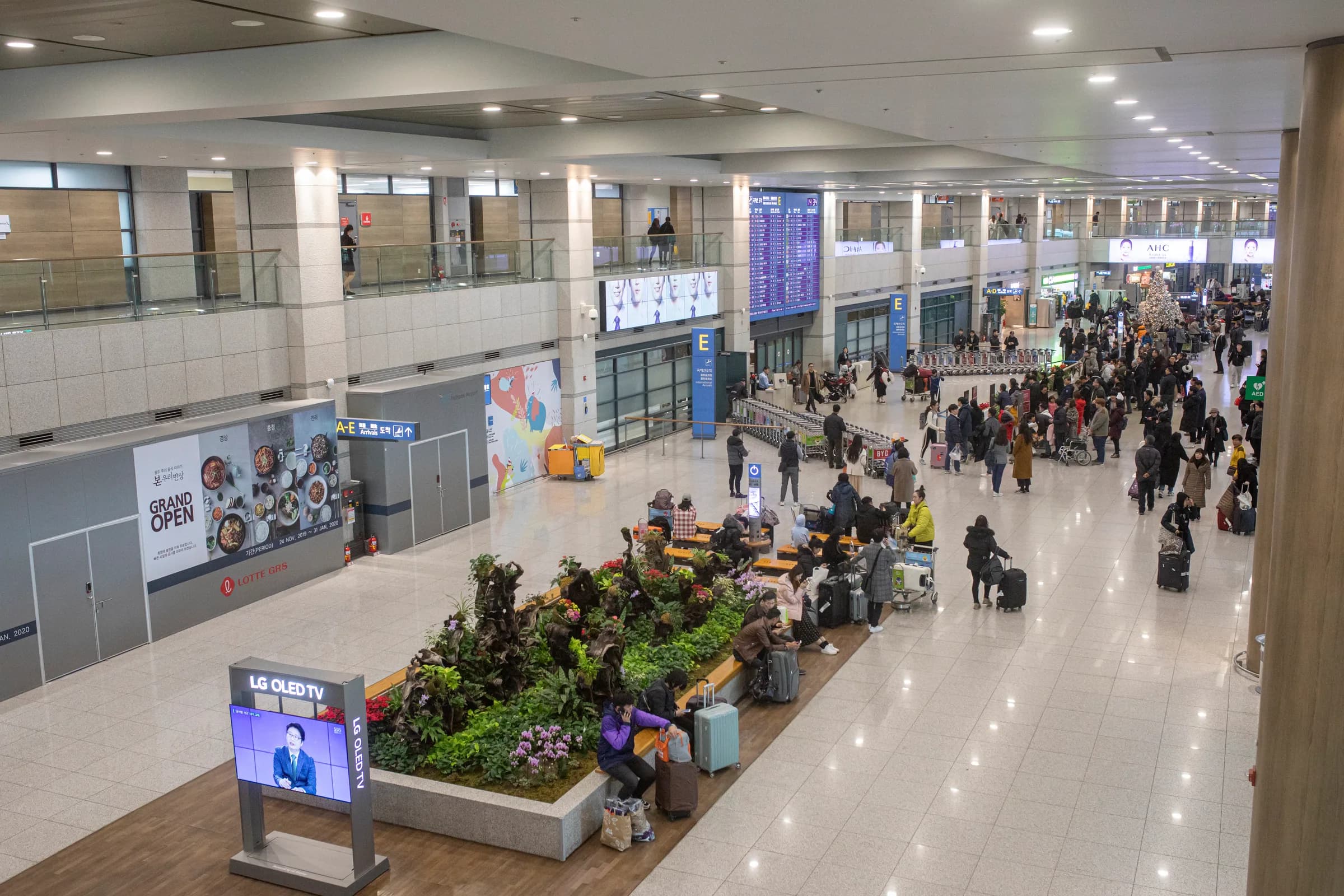
The two-bottle rule is the one most travellers know; the value cap is the one that catches the duty-free haul. Buying on the way in at Incheon's arrival duty-free counts against the same allowance.
The meat rule — the one that actually bites
Note: All meat products are banned: jerky, sausage, ham in instant noodles, meat floss, airline leftovers
Price: Fines scale to ₩10,000,000 for undeclared meat products — African swine fever turned this from a rule into a campaign
Detector dogs work the baggage hall and this is what they are there for. If anything in the bag might contain meat, bin it before the channel or declare it and let the officer decide. "It was sealed" and "it was a gift" are the two sentences that do not work.
Fresh fruit, vegetables, plants, seeds and soil are banned on the same quarantine logic.
How the declaration works now
Note: Nothing to declare = green channel, no form. Something to declare = the e-declaration or the paper form, red channel
Korea dropped the universal paper form — within the allowances you simply walk out. The e-arrival systems cover immigration; customs only wants to hear from you if a limit above is in play, and one declaration covers a family travelling together.
Leaving: the other direction has rules too
Tax-refunded goods are expected to leave with you, and the refund desks check.
Currency at US$10,000+ must be declared outbound as well — and some souvenirs need paperwork rather than customs courage, antiques above all.