US citizens need no visa and no K-ETA for South Korea in 2026. You can stay up to 90 days, and you file the free e-Arrival Card from 3 days before you land (Korean time). US citizens do not need a K-ETA for trips that land in Korea by 31 December 2026. For landings from 1 January 2027, the US State Department's Korea page says US passport holders will need one, and Korea had not posted its own 2027 notice when we checked on 5 November 2026. This page is the full checklist: visa, K-ETA, arrival card, immigration and customs, and the date when the rules may change.
Looking for the arrival card only? Go to our Korea e-Arrival Card guide. It has the official site, when to file, each field on the form and what to do if the site is down.
The checklist in order, for a US citizen landing in 2026:
-
A US passport. No visa for a stay of up to 90 days.
-
No K-ETA (waived to 31 December 2026, KST).
-
The free e-Arrival Card, filed from 3 days before you land.
-
Fingerprints and a face photo at immigration, if you are aged 17 or older.
-
Customs: walk through with nothing to declare if you are within US$800 in goods.
Who needs what
| You are… | Visa | K-ETA in 2026 | e-Arrival Card |
|---|---|---|---|
| US citizen | None, up to 90 days | Waived to 31 Dec 2026 (KST) | Required |
| Other K-ETA-exempt nationality (list below) | None, up to the days your country gets | Waived | Required |
| Other visa-free nationality not on the list | None | Required | Not required once K-ETA is approved |
| Holder of a valid K-ETA | None | Already have it | Not required |
| Visa nationals (Indian citizens among them) | Visa required | n/a | Required |
| Transit, staying airside | None | None | Not required |
So for a US passport the only paperwork in 2026 is the free arrival card.
Do US citizens need a visa for South Korea?
No, not for a short visit. The Korean Consulate General in Los Angeles says US citizens can visit without a visa for up to 90 days for tourism, business meetings, conferences or visiting family. It adds that the stay cannot be extended.
Note: Visa-free for US citizens: up to 90 days, for tourism, a business meeting, a conference or visiting family or relatives; extension of stay is not permitted (Consulate General in Los Angeles, read 4 Nov 2026). The Consulate General in Atlanta gives the same 90 days for tourism or family visits
Price: If you need a visa (for work, study or a longer stay): US$45 for US citizens, any number of entries, cash or money order (Los Angeles consulate). Atlanta lists a processing time of 14 business days (both read 4 Nov 2026)
Indian citizens and other visa nationals need a visa before they fly. That case has its own guide.
So a US tourist can stay up to 90 days with just a passport, with no extension.
Do Americans need a K-ETA in 2026?
No. The Korean Embassy in the USA notice of 29 December 2025 says the Ministry of Justice extended the K-ETA exemption by one year. It runs from 1 January 2026 (Thursday) to 31 December 2026 (Thursday), KST, and it covers the countries already exempt, the US among them.
Note: K-ETA is a pre-travel approval for visa-free nationalities. Exempt in 2026, per the Korean embassy in Switzerland's notice of 30 December 2025 (read 15 Oct 2026, not re-read today): Japan, Taiwan, Hong Kong, Singapore, Macao, Canada, the US, Guam, the UK, Germany, France, Italy, the Netherlands, Spain, Poland, Sweden, Finland, Norway, Belgium, Denmark, Austria, Switzerland, Liechtenstein, Australia and New Zealand
Price: ₩10,000 (about US$7 to 8), usually reviewed within 72 hours, on the K-ETA application page (read 4 Nov 2026). The embassy notice says exempt travelers can still apply, for example to skip the arrival card, and the fee is not refunded
Because of the exemption, most 2026 visitors never touch K-ETA. A frequent visitor might still want one, since a valid K-ETA means no arrival card. If you apply, use only k-eta.go.kr or its app. The K-ETA site warns about look-alike sites that charge high fees for "fast" service.
So K-ETA is optional for US citizens until 31 December 2026 (KST).
Do I need the Korea e-Arrival Card?
Yes, if you do not hold a valid K-ETA. The official guide lists people exempt from K-ETA among those who must file. It is free, online only at e-arrivalcard.go.kr, and opens 3 days before arrival, Korean time.
Booking: e-arrivalcard.go.kr is the only official site. Filing opens 3 days before arrival (KST) and runs up to immigration. The card covers one entry and lapses 72 hours after you submit it (official guide, read 4 Nov 2026)
You need your passport, an email address, the arrival flight number and date, your first address in Korea and a departure date. The step-by-step, the email delay notice and the help line are in our card guide, so this page does not repeat them.
So file the card online in the 3 days before you land, and keep the issue number on your phone.
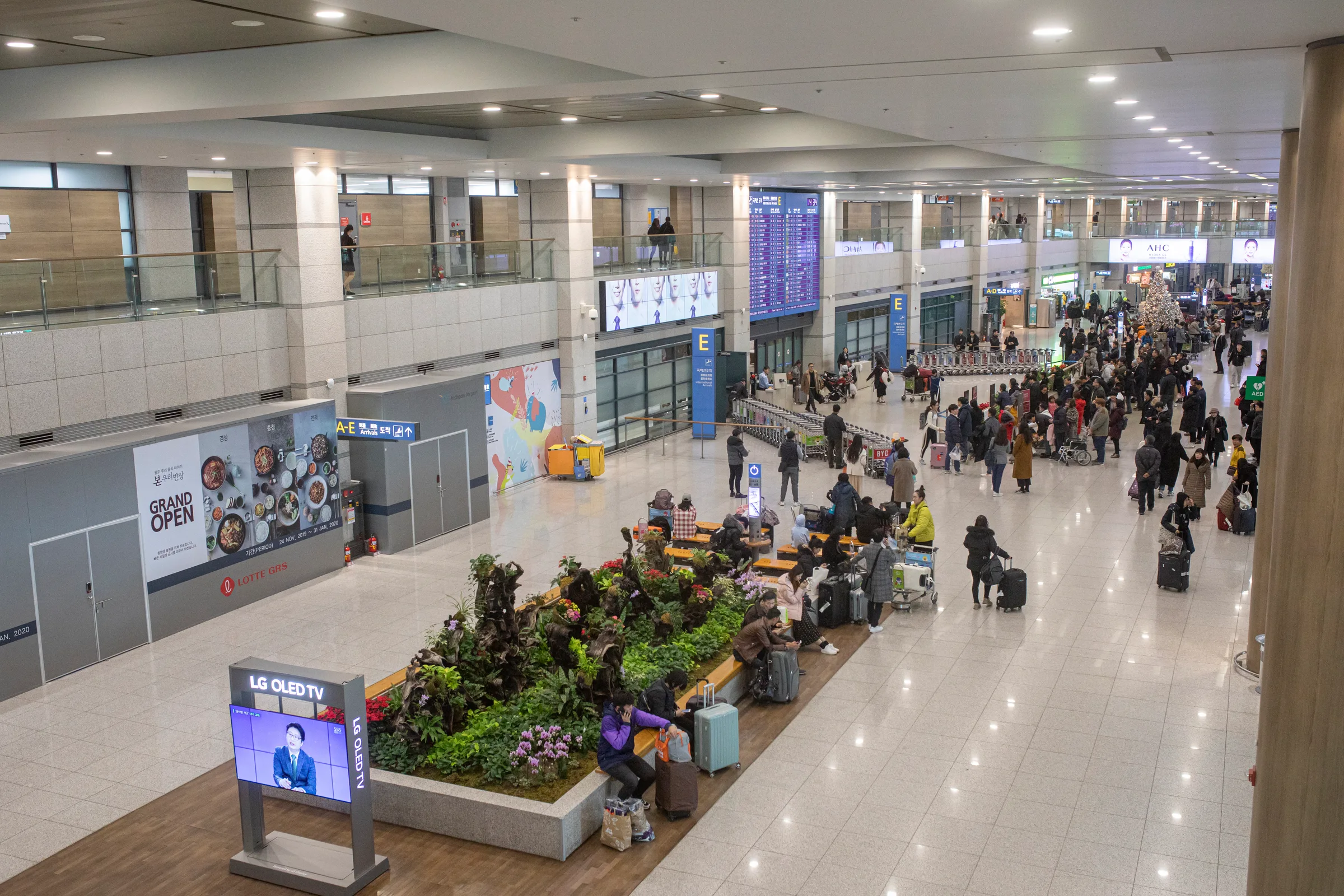
What happens at Incheon immigration and customs?
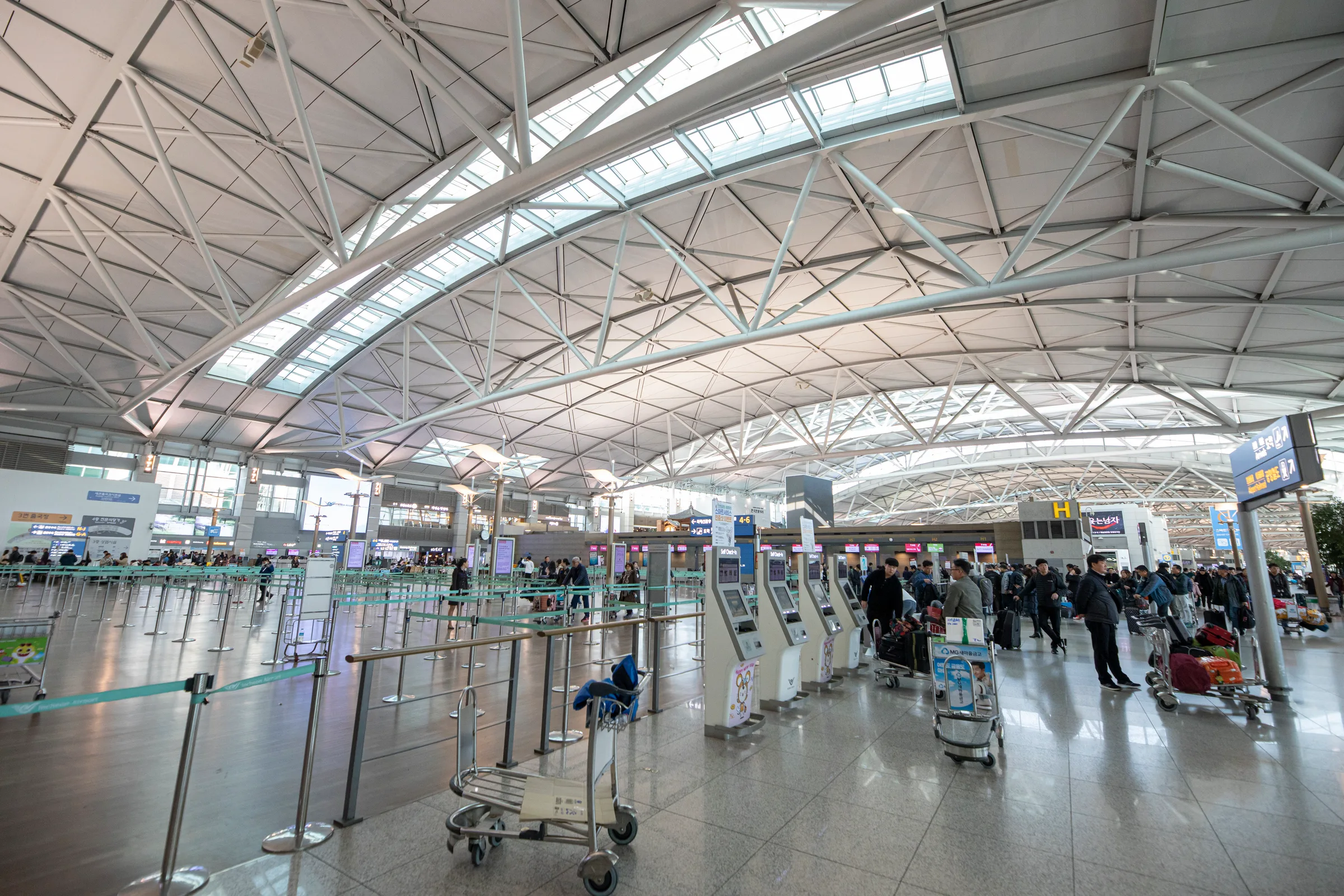
The steps run in this order: immigration, baggage claim, then customs. The Incheon Airport arrival immigration page says foreign visitors show their passport and arrival card, and those aged 17 or older give fingerprints and face data.
Getting there: Immigration: red line for foreign nationals, blue line for Korean nationals. Priority lanes serve, among others, children under 7, people aged 70 and over, pregnant women and people with reduced mobility (airport.kr, read 4 Nov 2026)
At customs, the Incheon Airport customs page says you skip the declaration form if you have nothing to declare. You use the no-declaration lane, but customs may still inspect anyone.
Price: Duty-free allowance per person: US$800 in goods; alcohol up to 2 L in total, worth US$400 or less; 1 carton (200 cigarettes); perfume up to 100 ml. Under 19 years old: no duty-free alcohol or tobacco (airport.kr, read 4 Nov 2026)
Note: Declare cash, checks and securities over US$10,000 in total. Meat products, fruit, plants and seeds go through quarantine. A false or missing declaration can add a penalty of 40% or 50% of the tax due (airport.kr, read 4 Nov 2026)
Note: With goods to declare, fill in the form (one per family) or use the "Traveler Customs Declaration" app, then use the "Goods to Declare" lane. Customs desks: Terminal 1 032-722-4422, Terminal 2 032-723-5119 (airport.kr)
So within US$800 and with no meat or plants, you walk through customs with no form.
How do I spot the scam sites?
Paid "K-ETA" and "arrival card" sites can rank above the official ones in search. Both official sites end in .go.kr, and both warn about look-alikes.
Note: The e-Arrival Card notice "e-Arrival card is free of charge" warns about sites with similar names that ask for personal data or fees. The K-ETA page says to apply only at www.k-eta.go.kr or the K-ETA app, and warns about sites that charge high fees for "agency" or "express" service (both read 4 Nov 2026)
Some of these sites submit the free form for a fee, and some collect your passport data. Type the address yourself and do not click an ad.
So the arrival card is always free, and a US citizen has no K-ETA to buy in 2026.
What changes on 1 January 2027?
What is decided and what is not (checked 4 November 2026)
Hours: Decided: the K-ETA waiver for US citizens covers 1 January to 31 December 2026 (KST). Source: Ministry of Justice decision, posted by the Korean Embassy in the USA on 29 December 2025
Note: Not decided, as far as we can find: whether the waiver continues in 2027. On 4 November 2026 the K-ETA site's notices ran to 3 November 2026 (a service pause on 11 November 2026) and an email delay notice of 13 October 2026. None was about 2027
Note: The US view: the US State Department South Korea page says the K-ETA exemption for US passport holders runs through 31 December 2026 and that they will need a K-ETA from 1 January 2027. It also lists Level 1, issued 28 May 2025, no visa for business or tourist stays of 90 days or less, and a passport that must be valid at the time of entry with no minimum validity (read 4 Nov 2026; the K-ETA lines re-read 5 Nov 2026)
Note: The listing date: the K-ETA site lists the extension notice with the date 20 March 2026. The notice itself, read on 15 October 2026, is dated 23 December 2025 and gives the same 1 January to 31 December 2026 period
Here is what that means by travel date.
-
You land on or before 31 December 2026: you do not need a K-ETA. You still need the e-Arrival Card.
-
You land on or after 1 January 2027: plan on a K-ETA. That is what the US State Department page says on 5 November 2026. Korea has posted no 2027 notice, and if it extends the waiver again, the rules stay as they are now.
-
Your trip crosses the new year: the waiver is written as a period of dates, so the day you land is what matters. We did not find an official sentence about trips that cross the new year, so check the portal.
How late can the answer come? The 2026 extension was dated 23 December 2025 on the K-ETA site and posted by the US embassy on 29 December 2025, in the last days before the old waiver ended. So silence in November does not mean the waiver will end, and it does not mean it will continue.
What to do now:
-
Book flights and rooms as you like. K-ETA is not a booking step.
-
Look at k-eta.go.kr and the Korean embassy notices in the first half of December, and again the week you fly.
-
If you must land in January 2027 and want to be safe, you can apply on the official site for ₩10,000. The fee is not refunded if the waiver is extended.
-
Never pay a third-party site.
So for a 2026 landing nothing changes, and for a 2027 landing check k-eta.go.kr in December.