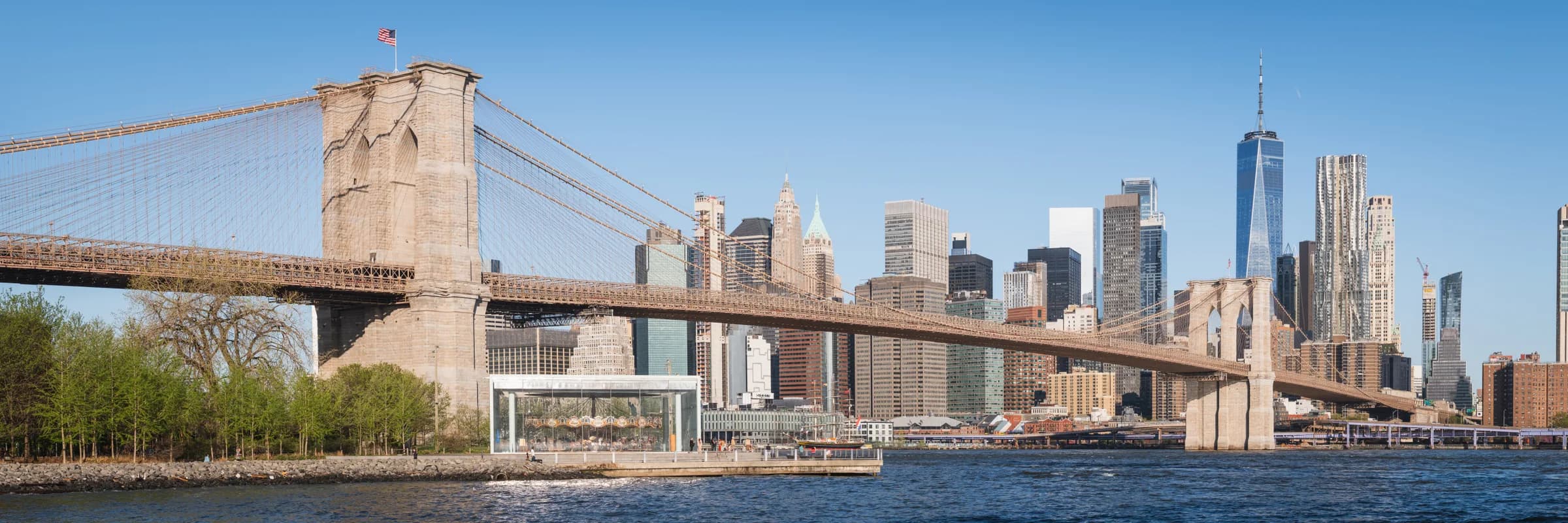
New York is the one American city where the question is not whether to rent a car but why anyone would. The subway runs all night, the grid is walkable, and the hotel decision — the one that actually shapes a first visit — is a matter of a few dozen blocks. This page covers that decision, the transit system as it works today, the three airports honestly, and the small set of mistakes that eat days.
Where to stay: the Canal-to-59th rule
| Area | Feels like | Best for | Watch out for |
|---|---|---|---|
| Midtown | The postcard | First visits, Broadway, everything on foot | Noise, Times Square prices |
| Flatiron / NoMad | Midtown's calmer edge | Same access, better dinners | Fewer budget rooms |
| Chelsea / West Village | Neighbourhood Manhattan | Second-night-out energy, the High Line | Pricey, further from Central Park |
| Lower Manhattan / SoHo | Old streets, new money | Shopping, downtown nights, ferries | Quiet after offices close |
| Williamsburg / Park Slope (Brooklyn) | Local life | Repeat visitors, longer stays | A river away from the icons |
Subway: Every area above sits on multiple lines — the rule is a station within five minutes' walk, which in Manhattan is almost everywhere between Canal and 59th
Price: Budget $150–400, mid-range $200–600, luxury $300–1,200 a night — book early, the city prices by demand (our band)
For a first visit the answer is Midtown, with Flatiron and NoMad as the same choice for people who sleep lightly. Brooklyn is a brilliant second visit and a slightly expensive first one, measured in subway minutes.
The subway, as it works now
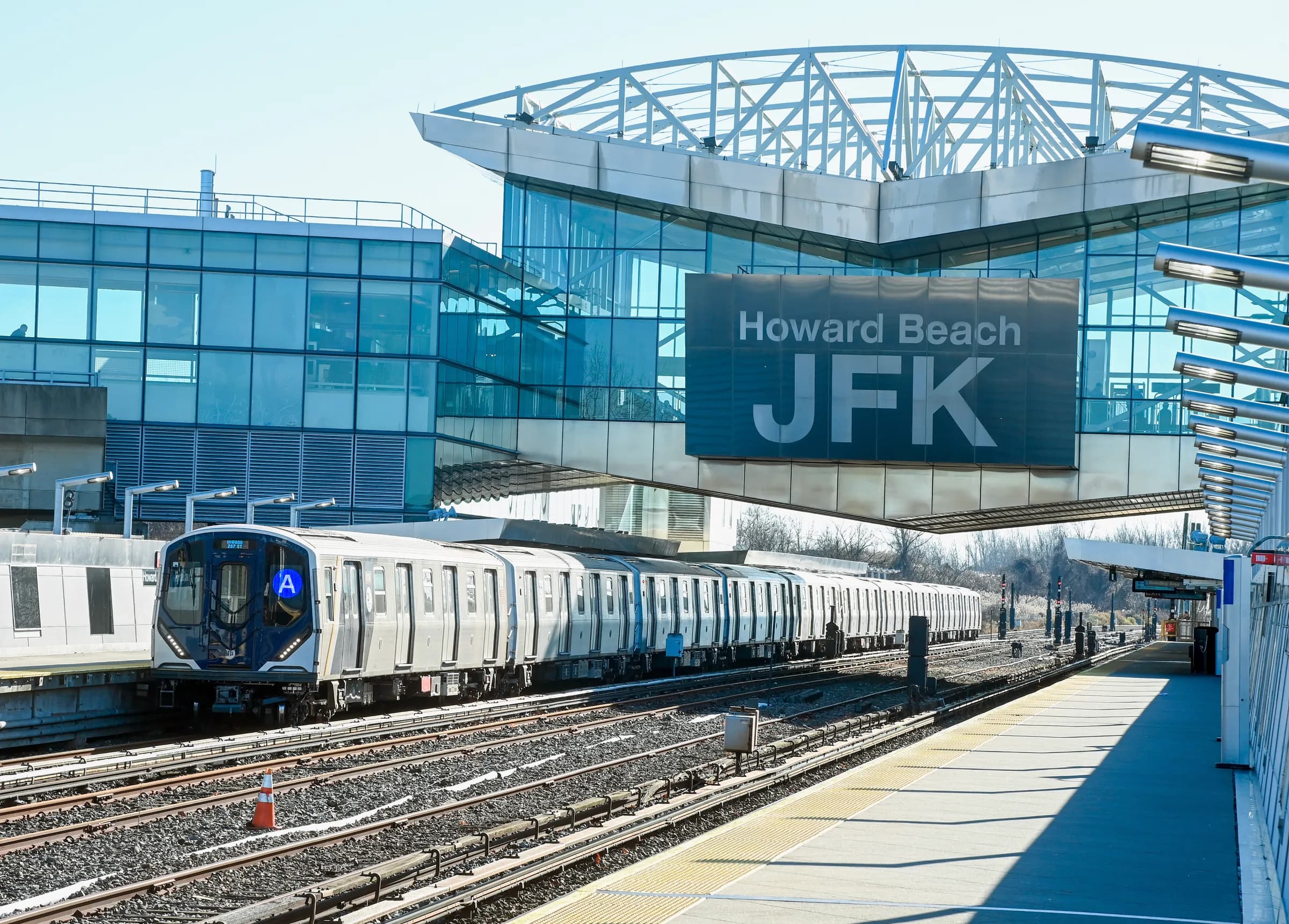
Subway: Tap a contactless card or phone at the turnstile — OMNY, one flat fare per ride, free bus transfers within two hours, and a weekly cap after twelve paid rides
Hours: 24 hours a day; overnight service is less frequent and some lines run local only
Note: Local versus express is the one trap — the front of the train and the platform sign say which; express trains skip the small stops
No ticket, no card to buy. The MTA app or Google Maps handle routing with live delays. Buses fill the crosstown gaps the subway leaves, and the Staten Island Ferry is the free harbour cruise nobody tells you about.
The airports, honestly
Getting there: Newark (EWR): AirTrain to the NJ Transit station, then a train to Penn Station — under an hour, the fastest rail link of the three
Getting there: JFK: AirTrain to Jamaica or Howard Beach, then the subway (E, J/Z, or A) — 60–90 minutes to Midtown, cheapest by far
Getting there: LaGuardia (LGA): closest on the map, no rail — the Q70 bus to the subway or a taxi, which traffic decides
Price: Yellow-cab flat fare from JFK to Manhattan plus tolls and tip; metered from the others — budget $70–100 door to door in traffic (our estimate)
If fares are close, fly into Newark. If JFK is much cheaper, the subway route is honest and slow. Immigration at JFK can add an hour or two at peak; Newark is often quicker through the hall.
How to plan the days
Note: Group by neighbourhood — a downtown day, a Midtown-and-park day, a museum-mile day, a Brooklyn day. Two or three major attractions a day, booked ahead for the observation decks and the Statue of Liberty
The city is long and narrow; crossing it is the hidden cost of a badly ordered day. A city pass pays off on heavy sightseeing days and not on wandering ones.
What first-timers get wrong
-
Eating in Times Square. Walk three blocks in any direction.
-
Hop-on-hop-off buses as transport. They are slower than walking in Midtown traffic.
-
Five attractions a day. Three, with the walking between them, is the honest maximum.
-
Holiday weekends. Thanksgiving to New Year is wonderful and jammed; prices follow.
-
Saving on the hotel by sleeping far out. You pay it back in transit minutes every day.
Beyond New York without driving
The Northeast Corridor makes Boston, Philadelphia and Washington a train ride each.
What is checked here and what is not
The transit rules, airport links and neighbourhood characteristics are stable and checked on the date shown. Fares, hotel rates and attraction prices move; the bands are our estimate of the current range.