Sail out overnight, sail back by day. That is the whole plan, and it is the only version of this trip that earns the extra hours. Leaving Busan at 22:30 turns the crossing into a hotel night you would have paid for anyway, and you wake up in Fukuoka with the whole day ahead. Coming back at midday costs you a morning, but it lands you in Busan for dinner. If you only have a long weekend, or hate boats, fly instead — see the comparison below.
The only ferry left
Older guides still recommend the Beetle and the Queen Beetle, the JR Kyushu jetfoils that did the crossing in about 3 h 40. They are gone. The Queen Beetle was suspended in August 2024 after inspectors found hull cracks and water seepage, JR Kyushu announced in February 2025 that it was leaving the Japan–Korea route altogether, and the ship was sold to Pan Star, which now runs it on Busan harbour cruises. No one has replaced the fast service.
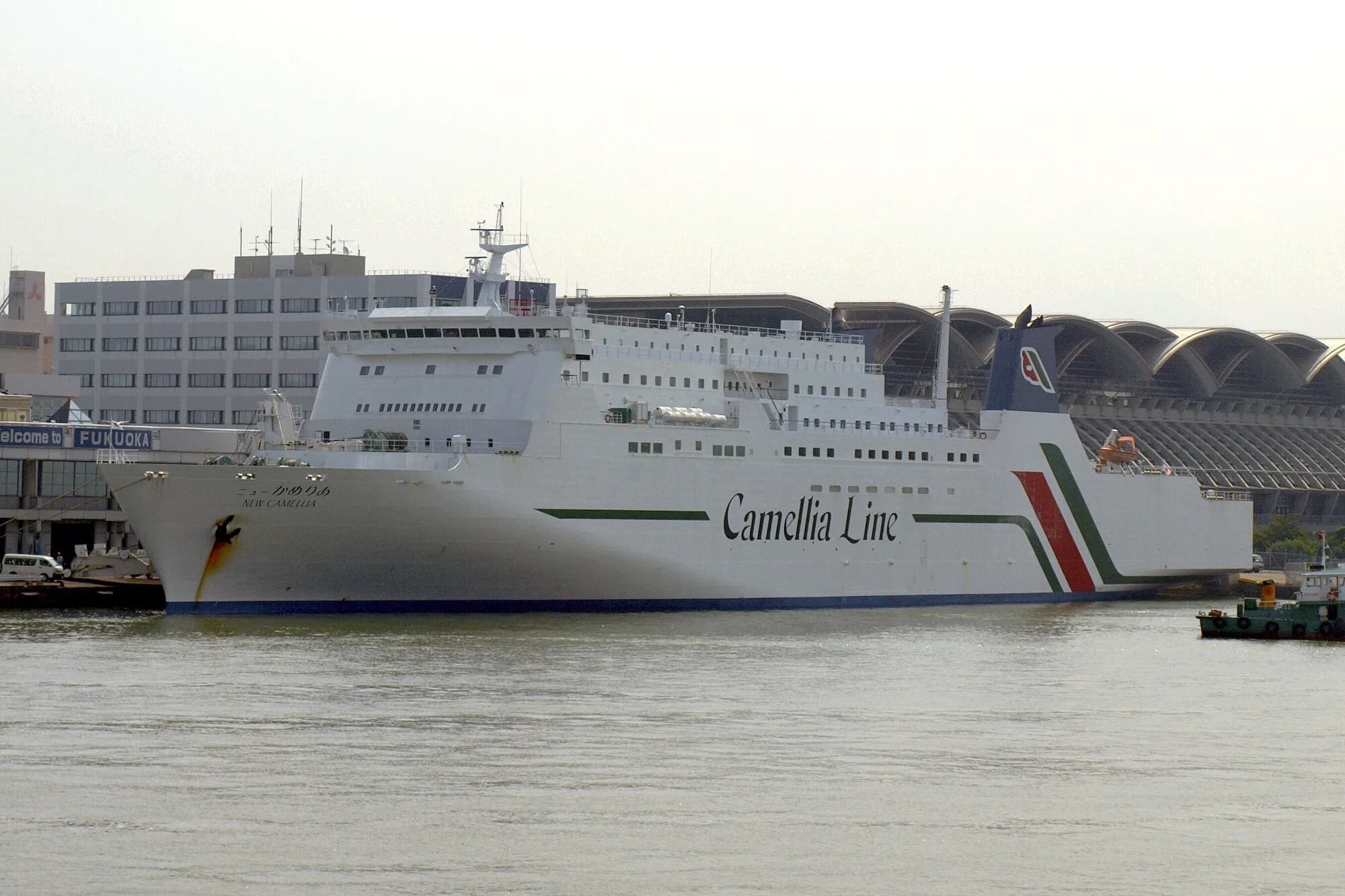
Note: The New Camellia (Camellia Line) is the only passenger ferry between Busan and Fukuoka. If a booking page offers a fast jetfoil, it is out of date
That makes the choice simpler than it looks. There is one boat, one company, and a timetable built around two sailings a day that do not match: night out, day back.
The sailings, cabins and fares
Getting there: Busan → Hakata (overnight): check-in 16:30–18:30, departs 22:30, docks at Hakata about 06:00, passengers stay aboard and disembark from 07:30 · Hakata → Busan (daytime): check-in 10:30–11:30, departs 12:30, arrives Busan about 18:30
Note: About six sailings a week each way, not daily. The day off is set month by month rather than fixed to one weekday, so open the Camellia Line calendar for your dates before you book anything else
Treat the end of check-in as your real departure time. Counters close at 18:30 in Busan and 11:30 in Hakata, and the boat does not wait.
| Class | What it is | One way | Return |
|---|---|---|---|
| Second class | Shared Japanese-style room, futon on a tatami floor | ¥12,000 | ¥22,800 |
| Second class berth | Shared room with bunk-style berths | ¥13,500 | ¥25,800 |
| First class | Small private room | ¥15,000 | ¥28,800 |
| Special room | Larger private room | ¥25,000 | ¥48,800 |
The table, one row at a time: second class is a big shared room where each passenger gets a futon space on the tatami; the berth version trades floor space for a bunk with a little more separation; first class is a private room for two to a small group; and the special room is the suite, for people who want a door that locks and a window.
Price: Fares are per adult, in yen. On top: ₩6,000 port tax + ₩1,000 tourism fund when you leave Busan, ¥3,000 departure tax when you leave Hakata, and a fuel surcharge added at booking that moves with fuel prices (one booking aggregator showed about ¥1,200; check the live total). Checked baggage is charged above the free allowance — about ¥800 for the first 20 kg
Cheapest is the answer for most people. A second-class fare is in the same range as a budget flight on the route, so the ferry's saving is the hotel night it replaces and the two city-centre ports, not the ticket itself.
Busan Port: getting there and checking in
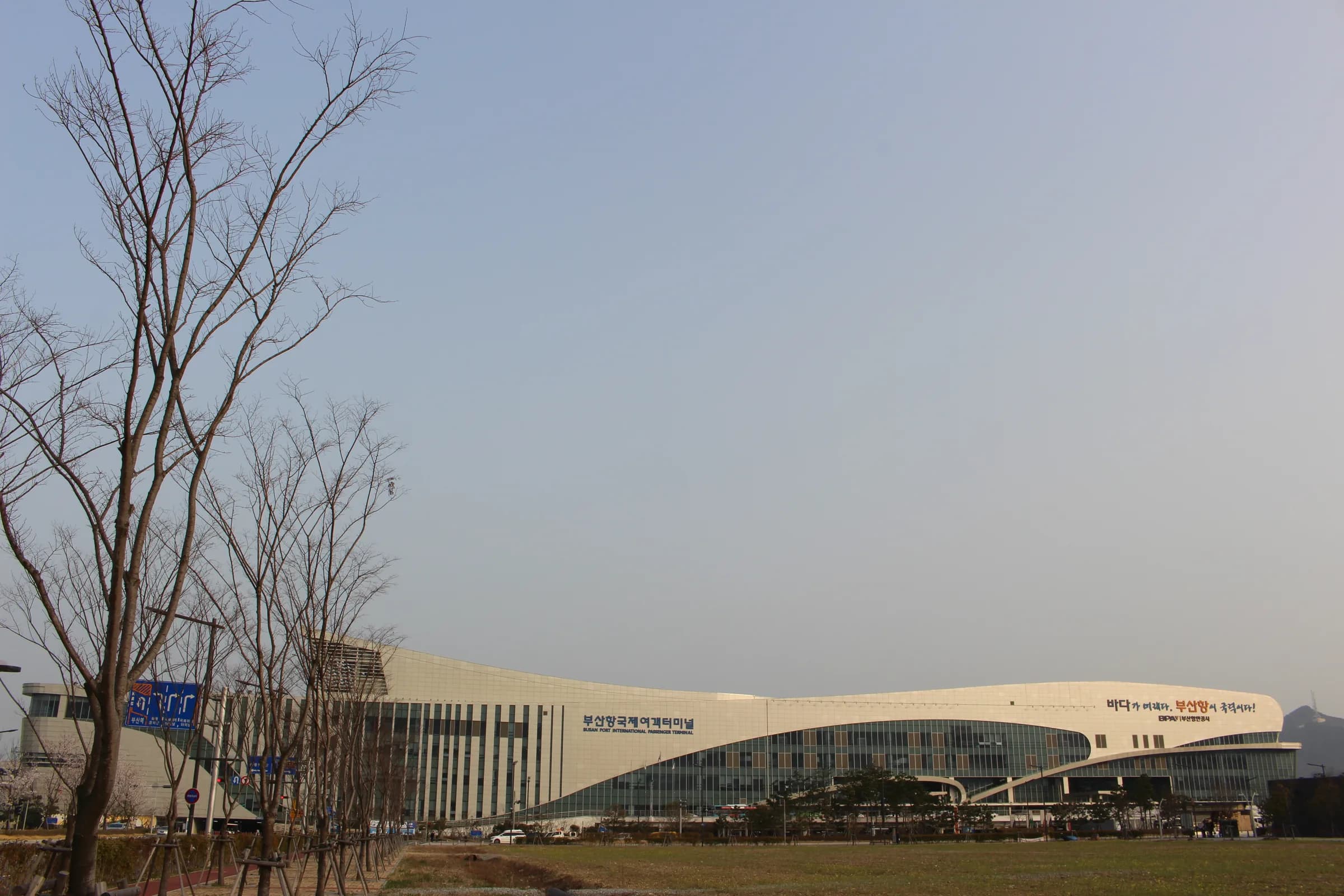
Address: Busan Port International Passenger Terminal (부산항국제여객터미널), Jungang-dong, Dong-gu, Busan — across from Busan Station
Subway: Metro Line 1 or KTX to Busan Station, then 10–15 minutes on foot (about seven by the covered footbridge from the station). Check-in is on the third floor
Arrive in the first hour of the check-in window, not the last. The flow is: ticket collection or e-ticket scan, baggage handling, Korean emigration, a bag-and-passport check, then boarding. Large suitcases go through the baggage line; keep a small bag with the night's essentials, because you will not see your main luggage again until Hakata. Boarding for the 22:30 departure is in the evening and the ship is calm by midnight.
Eat before you board or at the ship's restaurant, which serves dinner and breakfast only, set meals around ¥1,000. The Busan end is flat and walkable: Busan's Chinatown is a few minutes from the station.
On board
The night is a plain, cheerful ferry night, not a cruise. You get a space in a shared tatami room, a rented futon and blanket, a public bath (it opens in set windows, including early morning before arrival), a restaurant that serves breakfast and dinner only, and a shop and vending machines that take yen only — won is not accepted on board.
The verdict on sleeping in a shared room is that it is fine if you bring the right kit. Bring earplugs and an eye mask, a hoodie for the air conditioning, a phone charger with a short cable, and a few thousand yen in coins and notes for the vending machines. Shower things are useful for the public bath. Wi-Fi on board is unverified here, so download offline maps and a Fukuoka transit app before you board.
Do not expect the boat to feel luxurious. Expect it to be quiet by midnight, bright by 06:00, and cheaper than the hotel room it replaces.
Hakata Port into Fukuoka
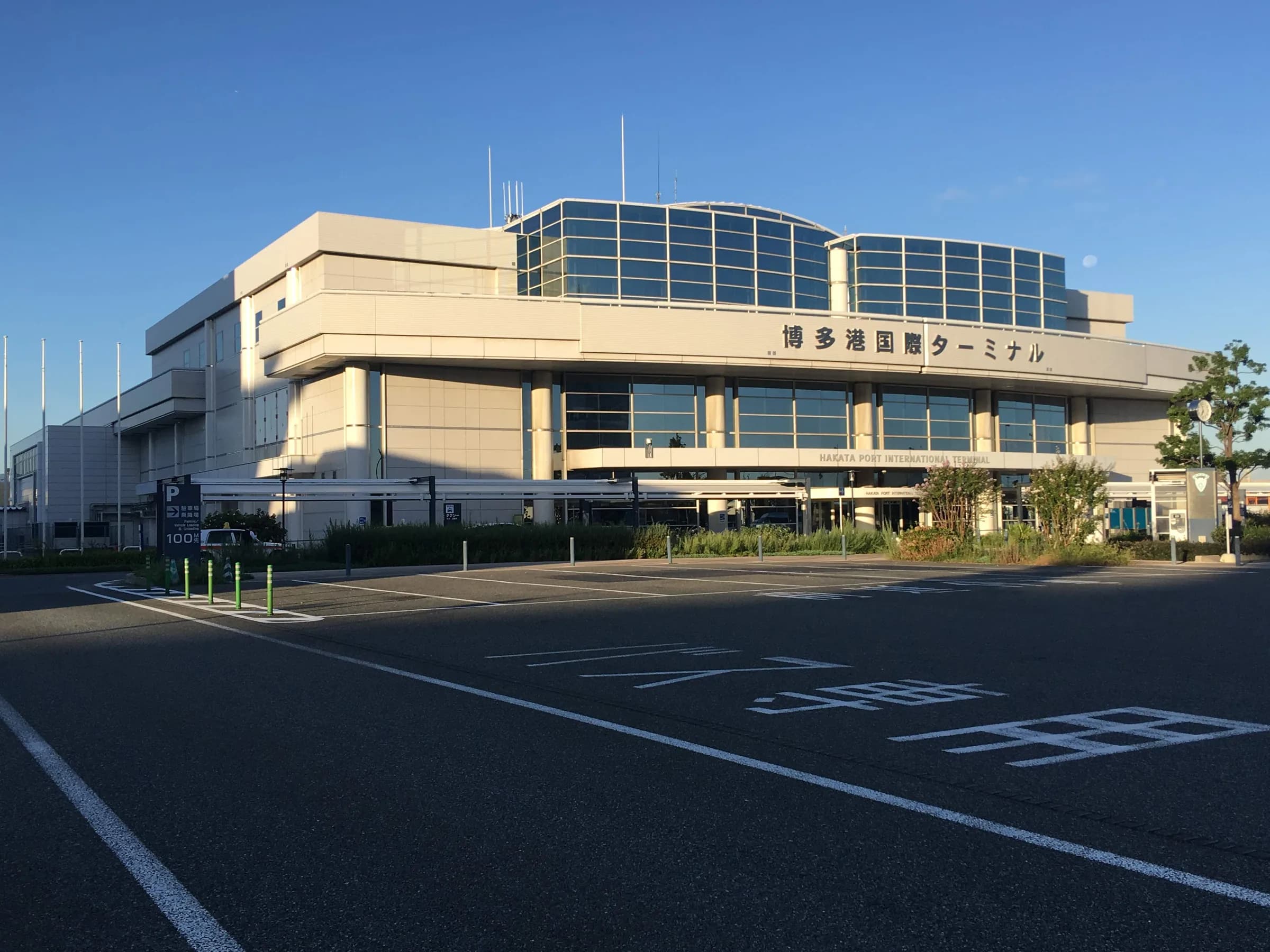
Getting there: Nishitetsu bus from the stop outside Hakata Port International Terminal: route 2A to Tenjin in about 15 minutes, and a separate run to Hakata Station in about 20; a few hundred yen either way, tap an IC card (nimoca, Suica) at the door. Read the board at the terminal for the next departure — the two destinations use different stops
Note: A taxi is the fallback with heavy bags or a late arrival; Fukuoka taxis are metered and easy to hail at the terminal
Hakata or Tenjin? Hakata Station if you are catching a Shinkansen or the airport subway. Tenjin if you are staying: it is the shopping and restaurant core, and the Dazaifu train leaves from the Nishitetsu station here. With a morning arrival your room will not be ready, so put the bags in a coin locker at Hakata Station or ask the hotel to hold them, then spend the morning on the first stop of the itinerary below.
Five days, two countries: the loop
This is the version that works best on a five-day trip, with the boat doing the heavy lifting on both ends.
Days 1–2: Busan. Two days is enough for the headline sights and a seafood dinner. Pick a base from and use for what to put in them. Check in to the terminal on the evening of Day 2 and board the 22:30.
Day 3: Fukuoka, arriving by sea. Step off from 07:30, take the bus into town, drop the bags, and head out to Dazaifu.
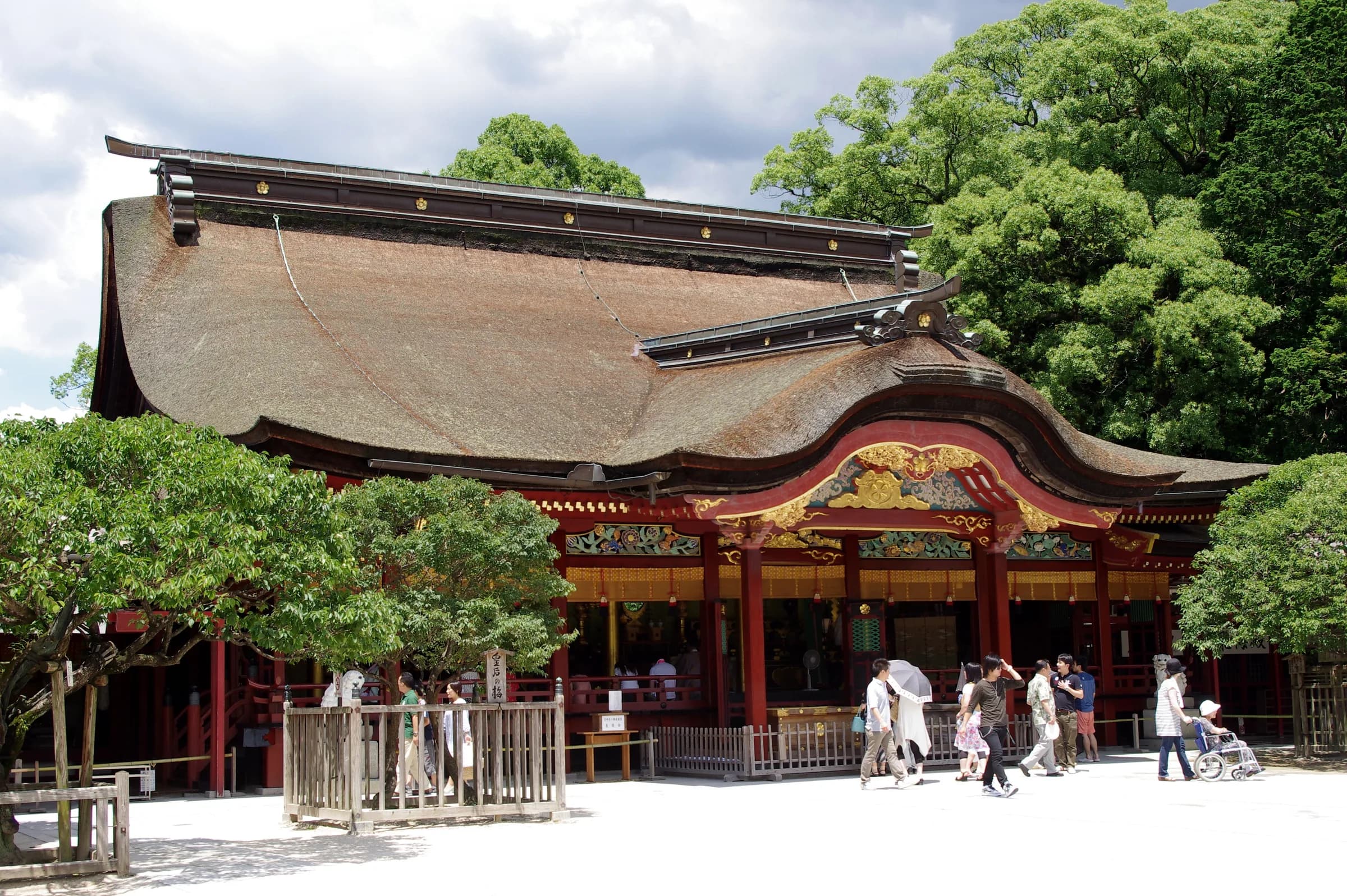
Getting there: Nishitetsu Tenjin Omuta line from Nishitetsu Fukuoka (Tenjin) Station, change at Nishitetsu Futsukaichi for Dazaifu — about 30 minutes in total. The Tenjin–Dazaifu run is the easy half-day
Day 4: the city. A tight Fukuoka day is Ohori Park in the morning, Canal City in the afternoon, and the Nakasu yatai food stalls by the river for dinner.
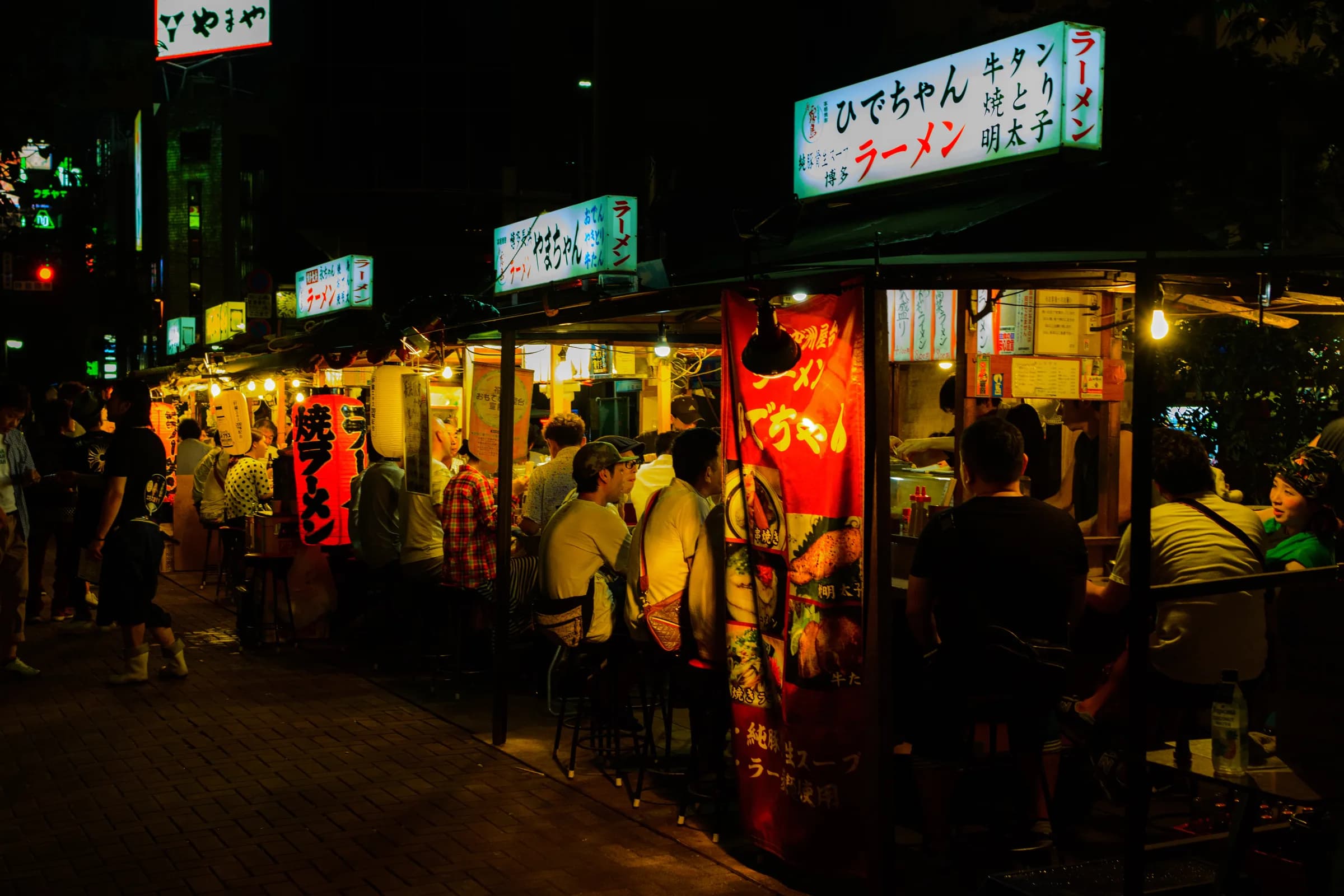
Note: Yatai in Nakasu set up from about 18:00 and tend to fill by 20:00; arrive early or share a counter. Cash is handy
Day 5: sail home by day. Hakata departs at 12:30, so check in at 10:30, with a final coffee in Hakata first. You reach Busan around 18:30, in time for dinner near Busan Station. Fly onward from Gimhae the next morning — covers the light rail and the taxi that gets you there.
Starting in Fukuoka instead? Reverse the loop. Fly into Fukuoka, spend two days there, take the 12:30 boat to Busan so you arrive for dinner on Day 3, do two Busan days, and fly home from Gimhae. The only thing you give up is the overnight crossing, since the night sailing runs Busan to Hakata and the day sailing the other way.
Ferry or flight
| Door to door | Cost | What you get | |
|---|---|---|---|
| New Camellia (overnight) | 9 hours, mostly asleep | ¥12,000 plus taxes | A hotel night replaced, a morning in Fukuoka |
| New Camellia (daytime) | 6 hours | ¥12,000 plus taxes | A quiet afternoon at sea, arrival in time for dinner |
| Flight | About 4 hours with airports and bags | Often similar to the ferry once bags are added | The fastest option, nothing else |
Flights are about 55 minutes in the air, but airport buffers, baggage and transfers at both ends stretch that to around four hours. The ferry wins on the hotel night it saves, on the ports being in the city rather than outside it, and on reaching a different country by water. The flight wins if you have one free day or a connection to make.
Entry rules both ways
Note: Korea: many nationalities, including the US and Canada, are K-ETA exempt through 31 December 2026 and fill in an e-Arrival card instead; confirm for your own passport. Japan: register on Visit Japan Web before you land. Most Western passports are visa-free for up to 90 days
You clear emigration and immigration at both ports, so carry your passport on your person, not in checked luggage. Duty-free allowances for alcohol and tobacco differ between the two countries, so check the limits before you stock up at the ship shop or buy local gifts.
The other ferries
Getting there: Kampu Ferry, Busan to Shimonoseki — overnight, roughly 12 hours, for a Honshu start · PanStar, Busan to Osaka — overnight, roughly 18 hours, three sailings a week (both unverified here; check the operators)
They are for different trips, not substitutes. Neither goes to Fukuoka, and Shimonoseki to Fukuoka needs a train. If your plan is Fukuoka specifically, the New Camellia is the one.
What is checked here and what is not
Checked on 8 October 2026: the New Camellia as the only Busan–Fukuoka passenger ferry, the sailing times, the four fare classes and base fares, the Busan and Hakata taxes, the Beetle withdrawal, and the K-ETA exemption through 31 December 2026. Not checked: on-board Wi-Fi, the current fuel-surcharge amount, the exact bus fare at Hakata Port, the Kampu and PanStar timetables, and the exact days the ferry is off in any given month. Confirm those on the Camellia Line site and the Nishitetsu board before you go.