Seoul's skincare industry is enormous, and almost none of it is built for people on a nine-day trip. It is built for residents who go monthly, which is why visitors tend to pay tourist prices for the easiest version of it and come home thinking that was the whole thing.
The useful distinction is between shopping and treatment. They happen in different parts of the city, cost very different amounts, and suit very different trips.
Shopping: where not to do it
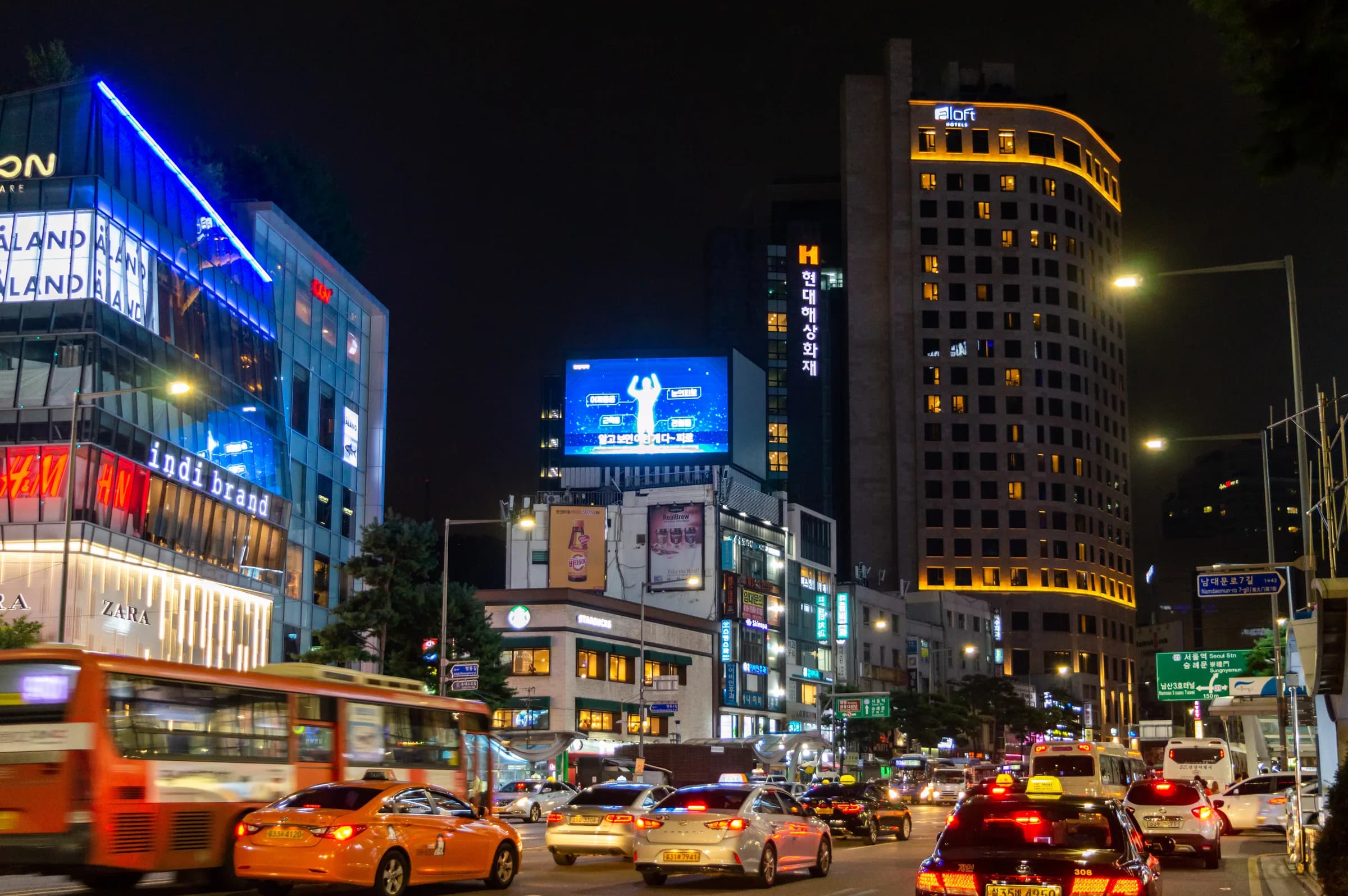
Myeongdong is where every guide sends you, and it works — the shops are dense, the staff speak English, and the free samples are genuinely free. It is also priced for visitors, and the sales pressure is relentless in a way that catches people off guard. Staff following you through a shop is normal here, not a sign you are about to be scammed.
Olive Young is the chain Koreans actually use. Same brands, normal shelf prices, nobody following you, and branches in every neighbourhood including several in Myeongdong itself. If you only change one thing about how you shop here, make it this.
Department store basements carry the premium lines and the counters that will do a skin analysis before selling you anything. Slower, more expensive, and the right call if you want a considered recommendation rather than a bag of sheet masks.
The saving against buying the same brands at home is real and largest in the mid-market — often half. It narrows at the top end, where the luxury lines are priced globally.
Treatment: what a visit actually involves
Korean clinics treat skincare as routine maintenance rather than an occasion, and the appointment reflects that. A consultation, a treatment that usually runs under an hour, and aftercare instructions. Most of what visitors book needs no recovery time at all.
Gangnam is the dense cluster, with entire buildings of clinics stacked floor on floor. This is where residents go and where the price is set by competition rather than by proximity to a tourist street.
What suits a short trip:
-
Hydration and facial treatments — no downtime, safe to do the day before you fly.
-
Peels — mild ones are fine mid-trip, stronger ones leave you sensitive to sun for
several days, which is a poor trade in summer.
- Laser work — effective, but wants a day without sun afterwards and is a bad idea
immediately before a long-haul flight.
Two practical points. Book before you fly, because clinics hold a limited number of English-speaking slots and those go first. And be specific about what you want, because a consultation that starts with "what do you recommend" tends to end with a longer list than you came for.
Nothing here is medical advice. What a treatment will do to your skin depends on your skin, which is the clinic's question to answer rather than this page's.
What it costs
This page does not print prices. Clinic pricing in Seoul moves with competition and promotions in a way that would make a published figure wrong within weeks, and a stale price is the single most annoying thing to find on a guide after you have budgeted around it.
The shape is stable, though. A basic facial costs noticeably less than the equivalent in London or New York. Laser packages are where the gap is widest — frequently a fraction of Western pricing, which is the reason the medical tourism industry here exists at all.
Fitting it into a trip
Treatment first, shopping after, if you can. A consultation will tell you what your skin actually needs, which is more useful than choosing from a wall of packaging in a language you do not read.
And if you are going to shop seriously, the duty free coupons are worth claiming before you fly — cosmetics are the category where Korean duty free beats the tax refund most clearly.