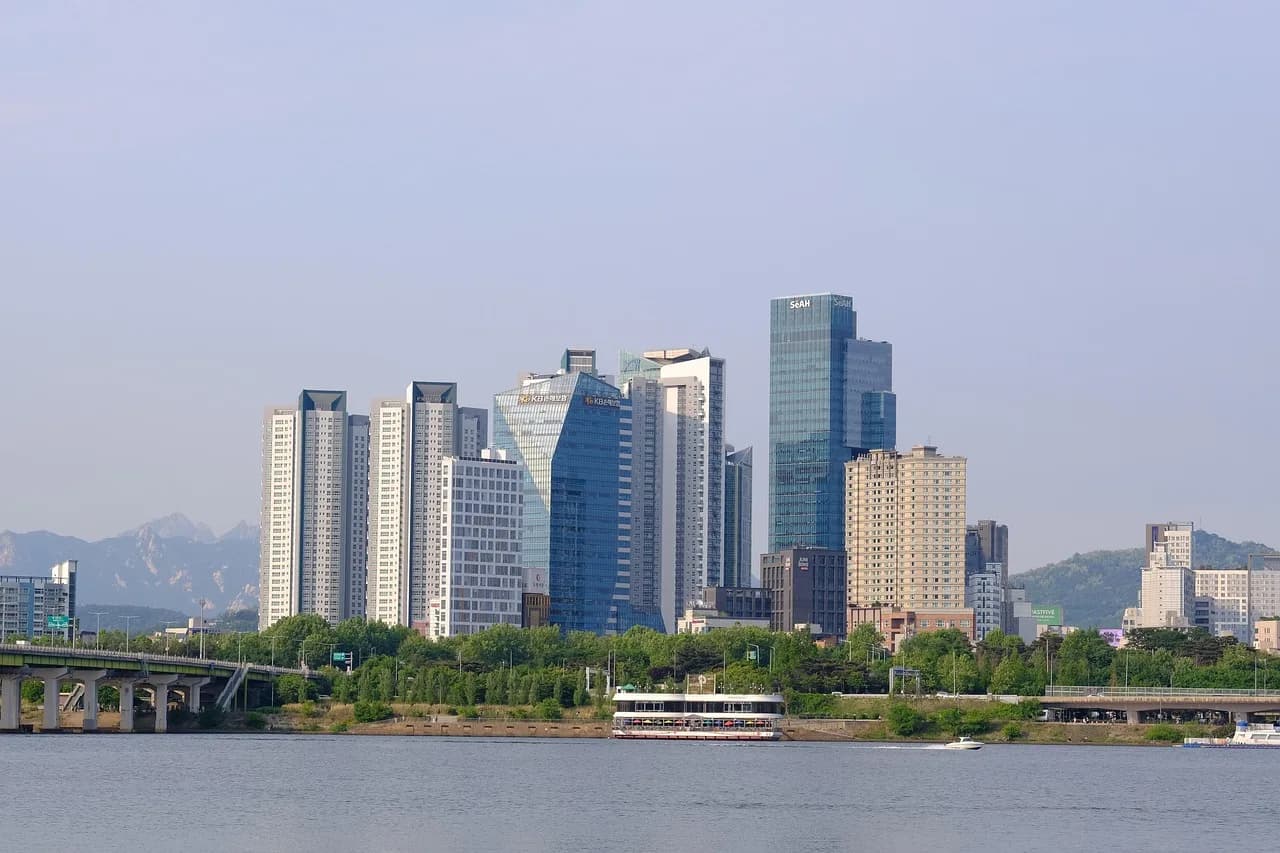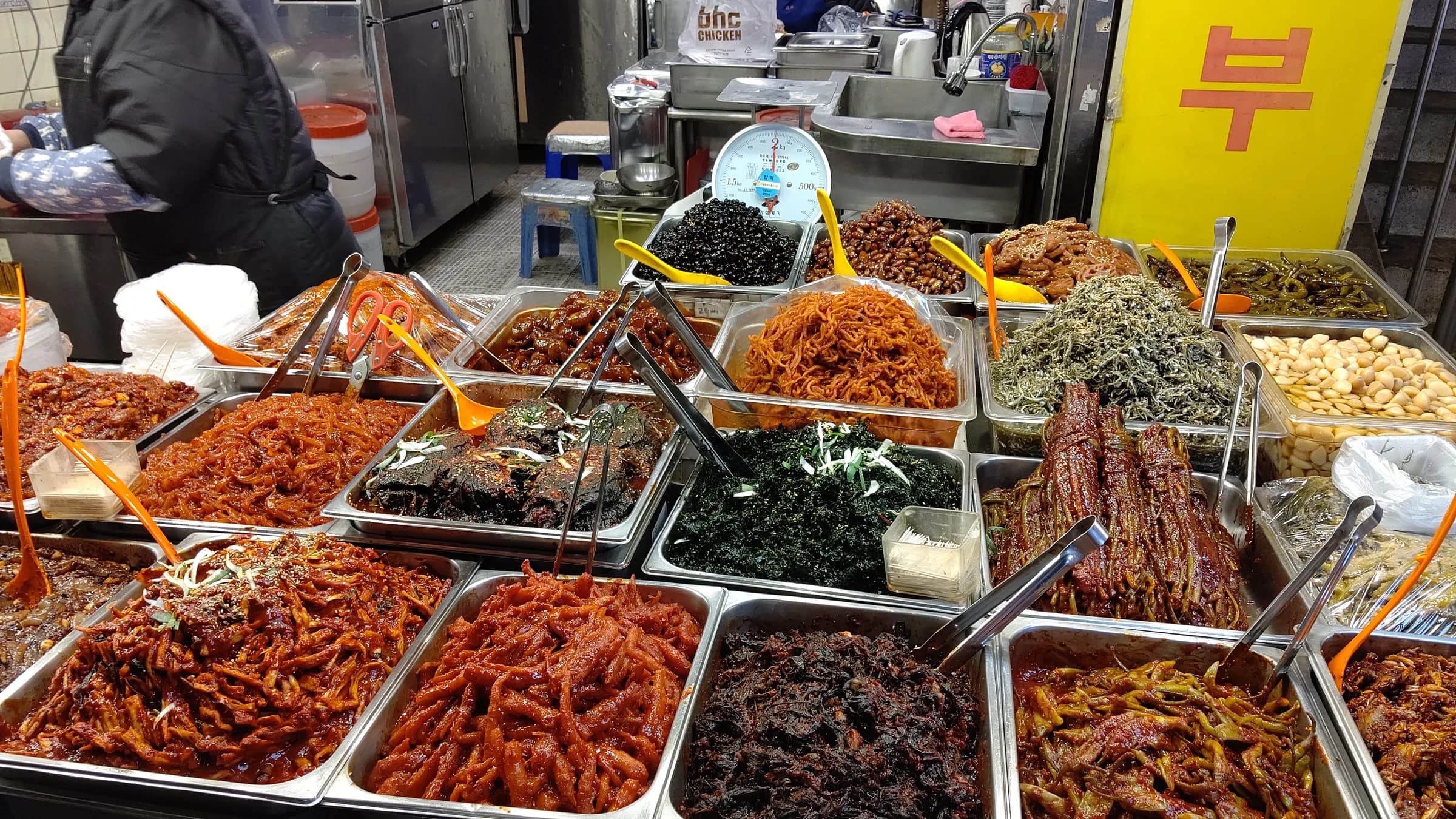
Seoul is a harder city for a vegetarian than its café-culture image suggests, and the reason is not a lack of vegetables. Korean cooking hides animal product in the places you cannot see: the kimchi is fermented with salted shrimp, the "vegetable" soup started with anchovy stock, the kimbap has a slice of ham tucked in by default. The visible menu is not the problem. The base layer is.
The good news is better than most guides know to tell you.
The one thing to know: temple food is accidentally Jain
Korean Buddhist temple cuisine — 사찰음식, sachal eumsik — bans all meat and fish, and it also bans the osinchae: the five pungent vegetables, which include garlic, onion, scallion, chive and leek. Monks consider them stimulants; Jain practice avoids them for its own reasons; the result is a 1,700-year-old cuisine that matches Jain restrictions more closely than almost any restaurant tradition on earth — by design, not adaptation.
In Seoul this is not theoretical. Temple-food restaurants cluster around Insadong and the Jogyesa temple area, from set-course dining rooms to simple lunch places, and a Templestay programme includes the meals as part of the stay. Root vegetables do appear in temple cooking, so the strictest Jain travellers should still ask — but nowhere else in Korea does the kitchen start this close to your rules.
Where to actually eat it
Four places, all open to visitors, verified October 2026. Prices and hours move — check or call before crossing the city for any of them.
| Place | What you get | Price | Hours / booking |
|---|---|---|---|
| Balwoo Gongyang 발우공양 | Full temple-cuisine set menus, run by the Jogye Order itself — the formal version | Sets ₩30,000–90,000 | Mon–Sat 11:30–21:00 (break 15:00–18:00) · closed Sun · reservation required, +82-2-733-2081 |
| Jogyesa Temple 조계사 | The head temple, directly across the street — see where the cuisine comes from | Grounds free | Open daily; Balwoo sits on the 5F of the Templestay centre opposite |
| Jinkwansa Temple 진관사 | Seoul's temple-food flagship — its kitchen trained a White House chef; food programmes and Templestay | Templestay from about ₩70,000 incl. meals | Programme-based — book ahead via the Templestay site |
| Bongeunsa Temple 봉은사 | Templestay with meals in the middle of Gangnam; short evening programme too | Evening programme ₩5,000 · overnight ₩120,000 | Grounds open daily; programmes by booking |
Addresses for the taxi driver, in Korean: Balwoo Gongyang and Jogyesa — 서울 종로구 우정국로 56; Jinkwansa — 서울 은평구 진관길 73; Bongeunsa — 서울 강남구 봉은사로 531.
The temples, one by one
Who each one suits, what the eligibility rules are — none of them restrict by nationality or religion — and what else is worth your time once you are there.
Balwoo Gongyang: the formal meal
This is temple cuisine at its most complete — the only restaurant run directly by the Jogye Order, a Michelin star on the wall, and the full philosophy on the plate: no meat, no fish, none of the five pungent vegetables. The ₩30,000 Zen set is the sensible entry point; the larger sets add courses, not understanding.
Style: Full temple-cuisine set menus — the only restaurant run by the Jogye Order itself
Address: 5F Templestay Centre, 56 Ujeongguk-ro, Jongno-gu · 서울 종로구 우정국로 56 5층
Subway: Jonggak Stn (Line 1) exit 2, or Anguk (Line 3) — both a five-minute walk
Price: Sets ₩30,000 / 45,000 / 60,000 / 90,000 — the ₩30,000 Zen set is the entry point
Hours: Mon–Sat 11:30–21:00, break 15:00–18:00, last order 19:40 · closed Sunday
Booking: Reservation required — +82-2-733-2081; say Jain at booking if it applies
Eligibility: None — no nationality or religion requirement. The only gate is the reservation, genuinely required, by phone, plus the Sunday closure. Jain travellers should say so when booking; this kitchen is the one in Korea that will understand immediately.
Book first, then cross the street — the temple the cuisine comes from is forty steps away, with its own entry next.
Jogyesa: the head temple, free
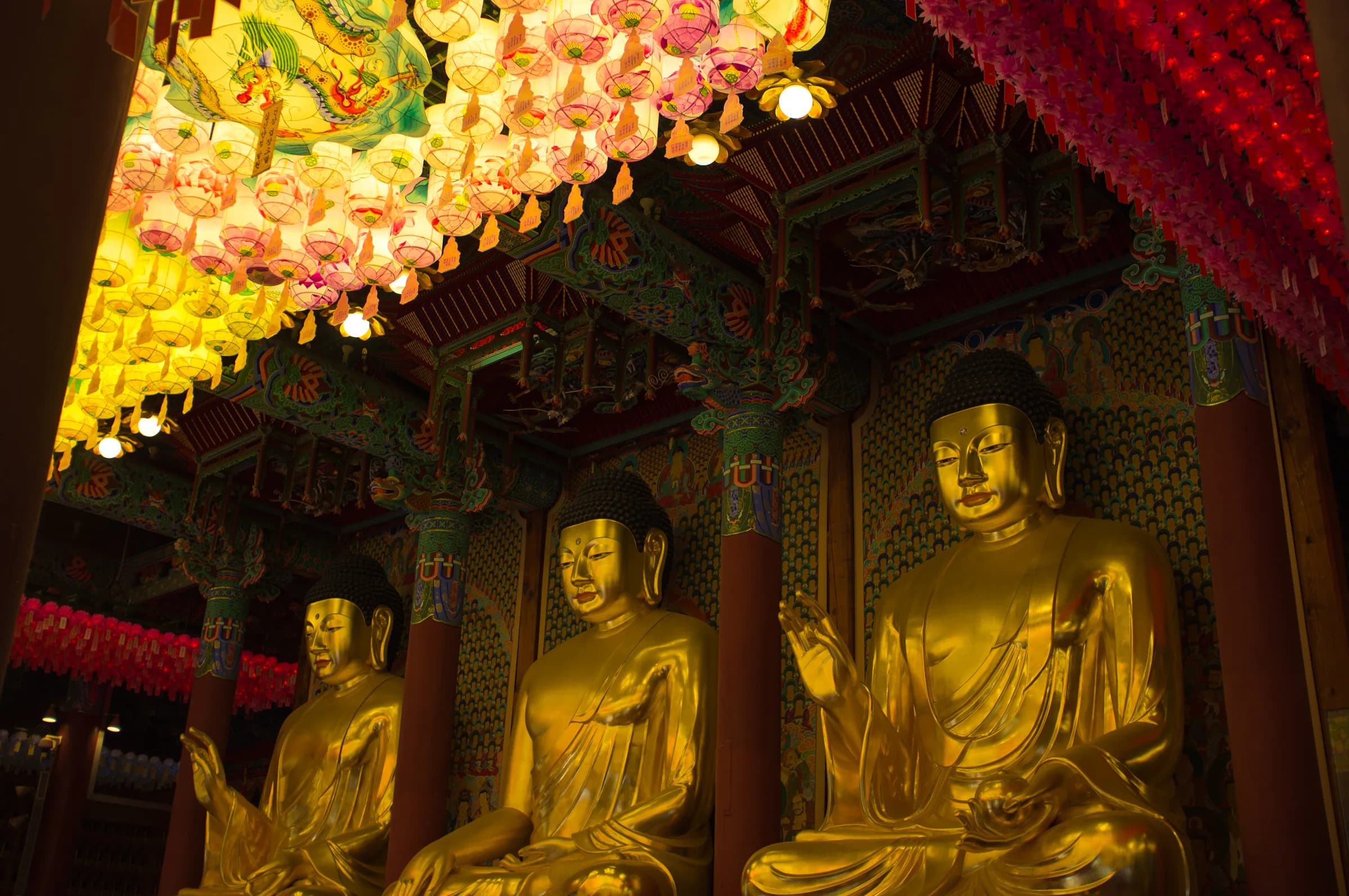
Style: The order's head temple — the courtyard the cuisine's rules were written for
Address: 55 Ujeongguk-ro, Jongno-gu · 서울 종로구 우정국로 55
Subway: Jonggak Stn (Line 1) exit 2, or Anguk (Line 3) — five minutes either way
Price: Grounds free — no ticket, no queue
Hours: Open daily; between services is the calm moment
Eligibility: None — walk in; it is a working temple, so the only rule is courtesy during services
The origin point, and the free half of the pairing. Make a half day of it — Insadong's craft shops start a block east, Gyeongbokgung is ten minutes north, and this is the same ground the one-week itinerary covers on its palace day:
Jinkwansa: where the tradition is kept
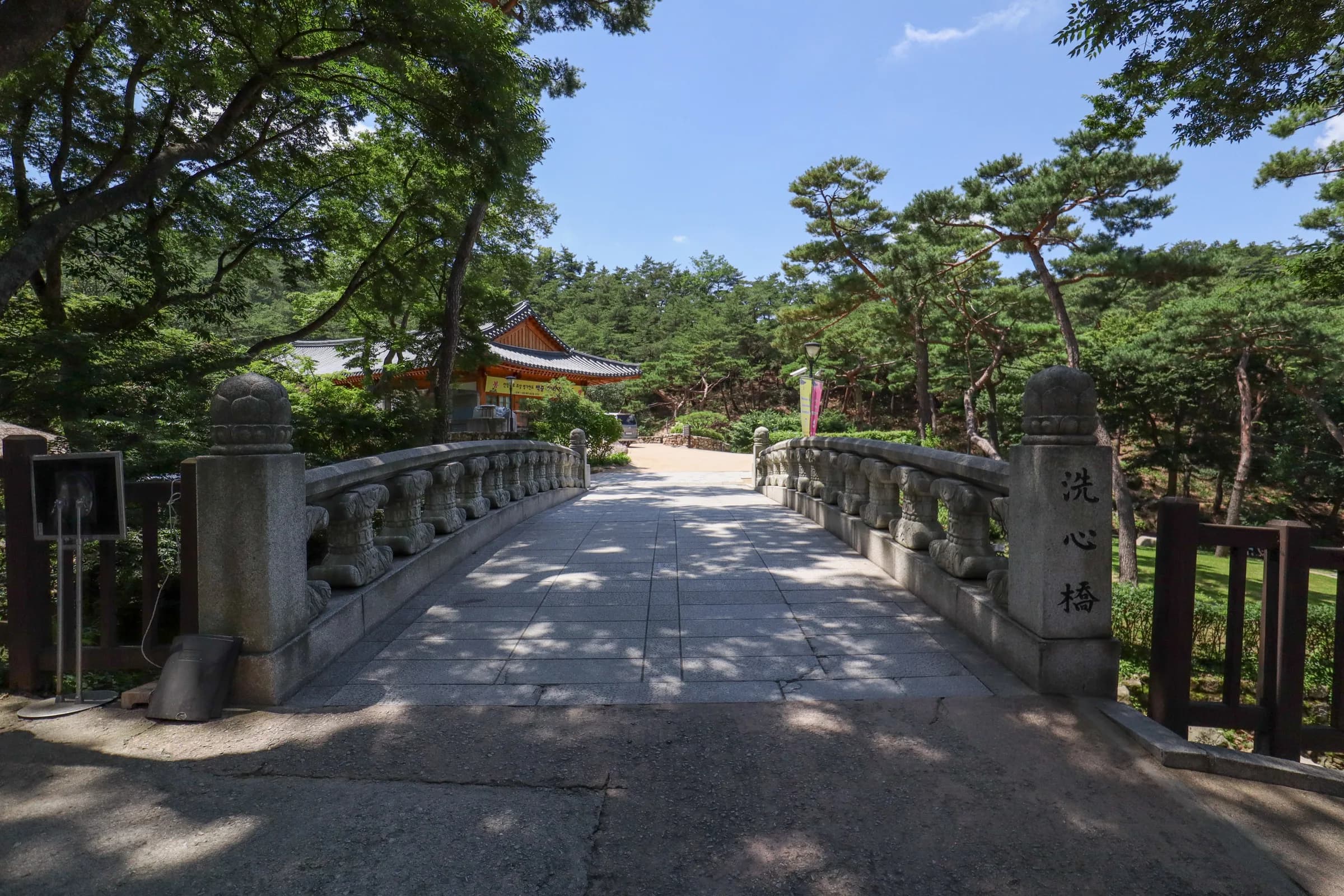
Out by the hanok village in the northwest hills, Jinkwansa is Seoul's temple-food flagship — the kitchen other kitchens learn from. There is no walk-in restaurant; the food comes as part of its programmes, from day experiences to the overnight Templestay (from about ₩70,000, meals included), which is the honest way to eat it: cooked for practice, not for customers.
Style: Temple-food day programmes and Templestay — no walk-in restaurant; the food is the practice
Address: 73 Jinkwan-gil, Eunpyeong-gu · 서울 은평구 진관길 73
Price: Templestay from about ₩70,000, meals included; day programmes less
Hours: Grounds open daily; the food only exists inside booked programmes
Booking: Official Templestay site (English sessions listed) — not resellers
Getting there: Line 3 to Gupabal, exit 3, then bus 7723 or 7211 to the 하나고·삼천사·진관사입구 stop (Hana High School · Samcheonsa · Jinkwansa entrance). From there it is a 15-minute uphill walk through Eunpyeong Hanok Village to the gate — show the bus driver 진관사 if in doubt, and that last stretch on foot is rather the point of a mountain temple.
Eligibility: Open to everyone — the national Templestay programme takes any age, religion or nationality, with one real rule: travellers 14 and under need an accompanying adult, enforced on arrival. Jinkwansa is one of seven Seoul temples running sessions in English; book through the official Templestay site, not a reseller.
Nearby: Bukhansan's trails start practically at the gate, and the surrounding valley is one of the city's quietest corners in autumn — if your dates are in the colour window, pair them:
Bongeunsa: the easy one to actually do
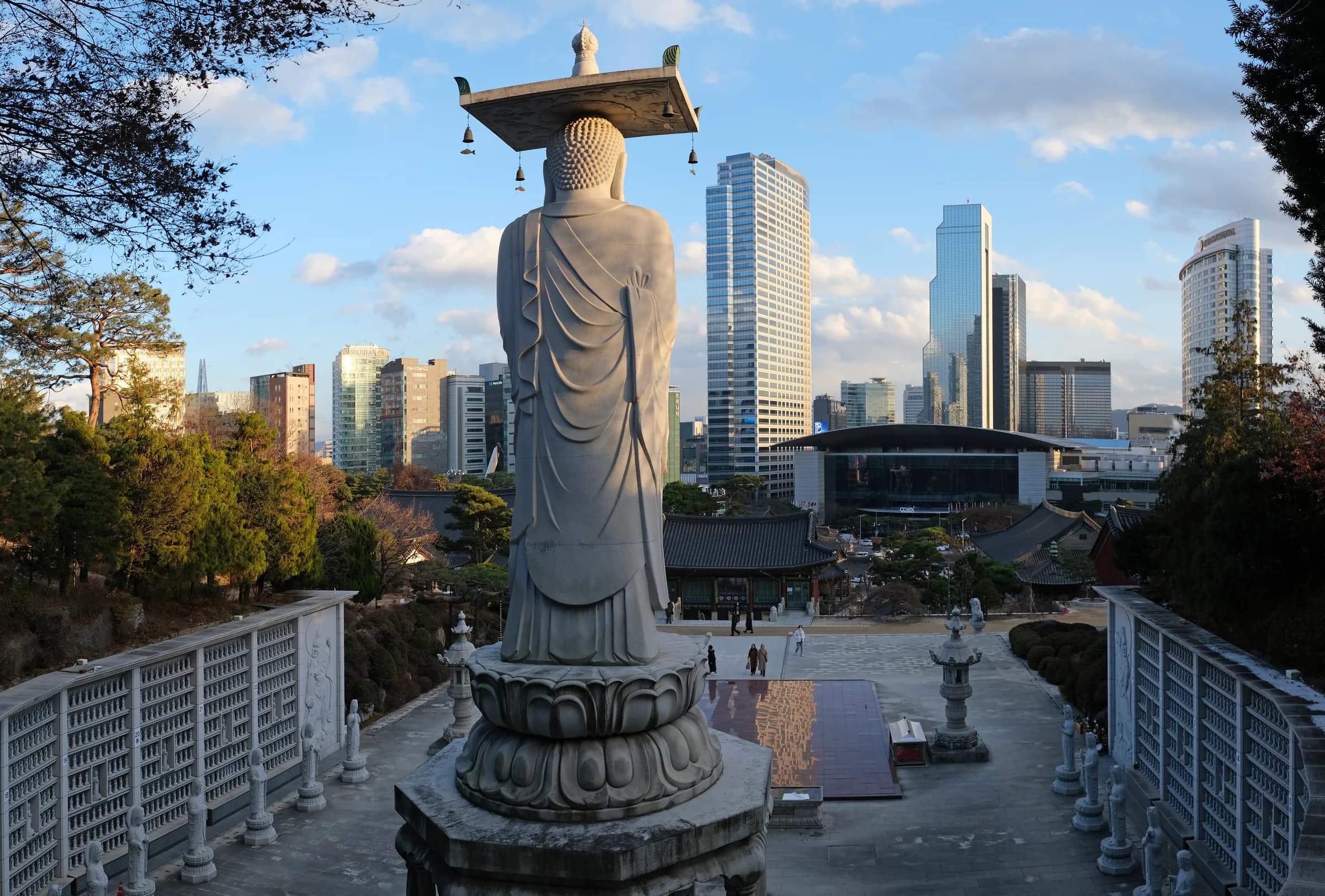
A 1,200-year-old temple facing the COEX towers, which is exactly why it works: no pilgrimage required. The ₩5,000 evening programme — temple tour, the four dharma instruments, the evening ceremony — is two hours and the cheapest serious temple experience in the city, and the English Templestay runs the first weekend of each month, Saturday 14:00 to Sunday 11:00, meals included (overnight ₩120,000).
Style: Urban Templestay with meals, plus the shortest serious temple programme in Seoul
Address: 531 Bongeunsa-ro, Gangnam-gu · 서울 강남구 봉은사로 531
Price: Evening programme ₩5,000 · overnight Templestay ₩120,000 with meals
Hours: Grounds open daily; English Templestay the first weekend of each month, Sat 14:00 – Sun 11:00
Booking: Templestay site — the English-weekend slots fill a month out
Subway: Bongeunsa Stn (Line 9) exit 1 opens at the gate; Samseong (Line 2) works from the COEX side.
Eligibility: The same open door — any nationality, any religion, under-15s with an adult. The English-weekend slots are the ones that fill; book the month before.
Nearby: you are in Gangnam — COEX's mall and aquarium are across the street, and the district guide covers whether staying here fits your trip at all:
The traps, in order of how often they catch people
Kimchi. Fermented with jeotgal — salted shrimp or anchovy — in nearly every ordinary kitchen. It arrives free with everything, and it is not vegetarian. Vegan versions exist; assume the default is not.
Broth. Most soups and stews start from anchovy or beef stock, including the ones with no visible meat. Kimchi jjigae, most ramyeon, the soup beside your rice — the flavour base is the animal product.
Kimbap. Looks like a vegetable roll; ships with ham and fish cake by default. Ordered without them it becomes one of the best cheap vegetarian meals in the country.
"I'll just have the vegetable one." Menus describe the topping, not the stock. The question that matters is what the liquid is made of.
Ordering: show, don't say
Verbal refusals fail across a language gap in ways a written card does not. Save these to your phone and show them:
저는 채식주의자입니다. 고기, 생선, 해산물을 못 먹어요. I am vegetarian. I cannot eat meat, fish or seafood.
For Jain requirements, add:
양파, 마늘, 파도 빼 주세요. Please also leave out onion, garlic and scallion.
Dishes that order well: bibimbap without meat and egg, japchae confirmed meatless, vegetable jeon (pancakes), kimbap stripped as above, and anything at a temple-food table.
The everyday base layer
Between sit-down meals, the city feeds a vegetarian cheaply and without negotiation: convenience stores label ingredients clearly and stock rice balls, fruit, salads and instant rice; markets and street stalls sell roasted sweet potatoes, corn, hotteok and fruit by the cup; bakeries are everywhere. None of it needs a phrase card.
And when you want certainty with spice, Itaewon's Indian restaurants — with more around Hyehwa and the university districts — carry marked vegetarian menus and understand a Jain request when asked plainly. Mains run ₩12,000–20,000: the dependable dinner at the end of a careful day.
Restaurants change hands and menus change seasons, which is why this page teaches the pattern rather than printing a list that rots. Verified October 2026; the phrases and the temple-food rule are the parts that will not move.