Gangneung is what Seoul means when it says "the sea" — the end of the KTX line east, the sunrise coast, and the city that made beach coffee a national habit. The mistake is booking "Gangneung" as if it were one place: the station, the beaches and downtown are each a ride apart, and the right base depends on which Gangneung you came for.
The areas at a glance
| Area | Feels like | Best for | Watch out for |
|---|---|---|---|
| Gyeongpo | Beach resort + lake | First visits, families, the classic stay | Spread out; you will bus or taxi everywhere |
| Anmok | Café row facing the sand | Couples, slow mornings, sunrise on foot | Small; rooms are guesthouses more than hotels |
| Downtown / station side | Ordinary Korean city | Budget beds, Jungang Market, early KTX | The sea is a bus ride away |
| Jumunjin | Working fish port, quiet sand | Second visits, the famous bus stop | Far north; thin evening options |
Each area in detail below — what staying there is actually like, and how it connects.
Gyeongpo — the classic base
Style: Resort hotels and condo towers between the lake and the long beach
Getting there: Buses 202-1/202-2 link Gangneung Station to Gyeongpo Beach in about 20 minutes
Price: ₩100,000+ in season for the resort tier, ₩50,000–100,000 shoulder (our band)
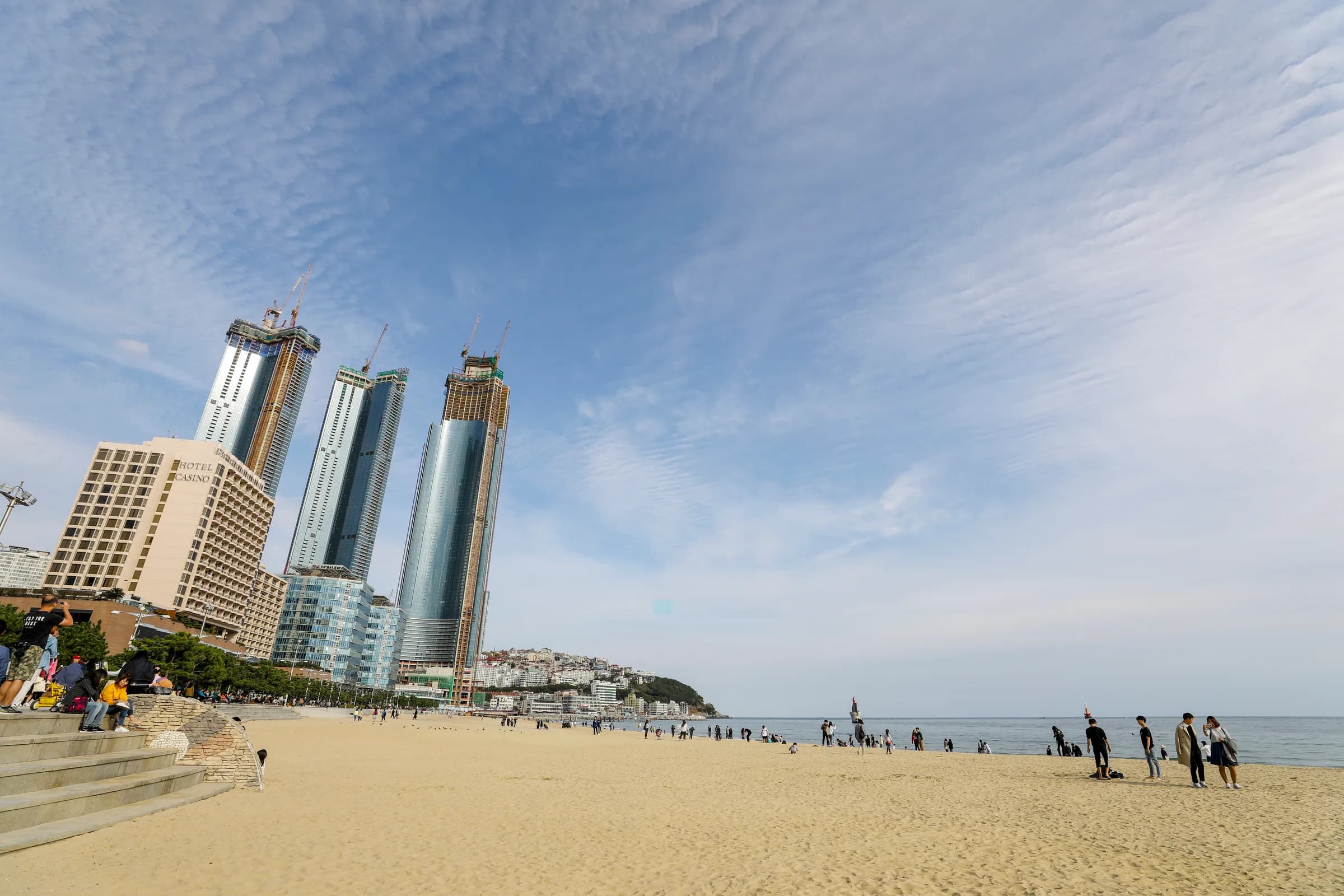
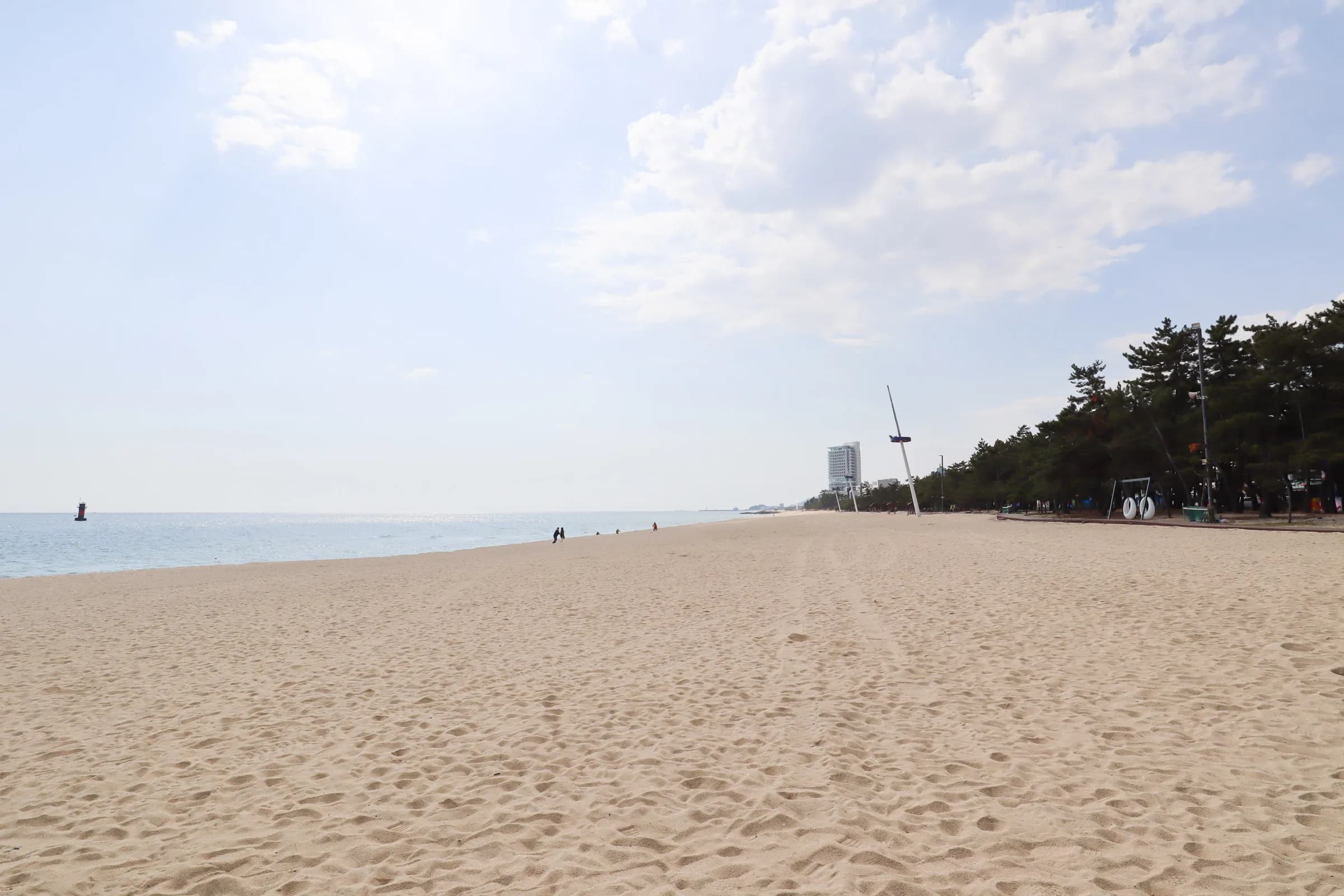
The postcard Gangneung. The beach is long enough to absorb August, the lake behind it has a cycling loop that fills with cherry blossom in spring, and the resort hotels put the sea in the window. If it is your first Gangneung and the beach is the reason, book here and stop optimising.
Anmok — the coffee street
Style: A row of cafés the length of the beach, guesthouses and small stays behind it
Getting there: Bus 202-1 from the station, around 15 minutes; taxis about ₩6,000 (our estimate)
Price: ₩50,000–100,000 for most guesthouse doubles (our band)
Anmok's beach is shorter and its mornings are better: the whole street faces east, and sunrise with a hand-roasted pour-over is the local liturgy. Evenings are quieter than Gyeongpo — which is either the drawback or the point.
Downtown — beds, market, early trains
Style: Business hotels and motels around Jungang Market and the old centre
Subway: No metro — but city buses radiate from here, and the KTX station is minutes away
Price: ₩20,000–50,000 motel tier, ₩50,000–100,000 for the newer business hotels (our band)
Stay here for the market — Jungang's squid sundae and potato dumplings are the local eating — for the cheapest beds in town, and for catching an early KTX without a dawn taxi across the city. The trade is obvious: the sea becomes a commute.
Jumunjin — the quiet north
Style: A fish-market port town with broad, under-used sand north of it
Getting there: Buses 300/302 from downtown, 30–40 minutes up the coast road
Note: The bus-stop photo spot from the BTS "You Never Walk Alone" shoot sits at Hyangho Beach, one stop further on
Second-visit Gangneung. The fish market does breakfast properly, the beaches rarely fill, and the famous bus stop is a short ride north — go early or queue for the bench.
Getting there and timing it
The KTX Gangneung line leaves from Seoul Station and Cheongnyangni; roughly two hours end to end. Summer weekends need the room booked well ahead — and are the only time Gangneung feels crowded. June and September buy the same coast with elbow room.